An audit of New York City’s subway bathrooms has revealed that most facilities lack basic amenities, including toilet paper, soap, and even toilet seats. The investigation, conducted by the MTA’s Office of the Inspector General, raises concerns about sanitation and public health across the transit system's 125 public restrooms.
The report, published Tuesday, examined 32 bathrooms between December 2024 and April 2025. While most were found to be relatively clean, the vast majority failed to provide essential supplies, forcing many commuters to avoid them entirely.
Key Takeaways
- An audit of 32 MTA subway bathrooms found widespread issues with basic supplies.
- All but four of the inspected open facilities were missing items like toilet paper or soap.
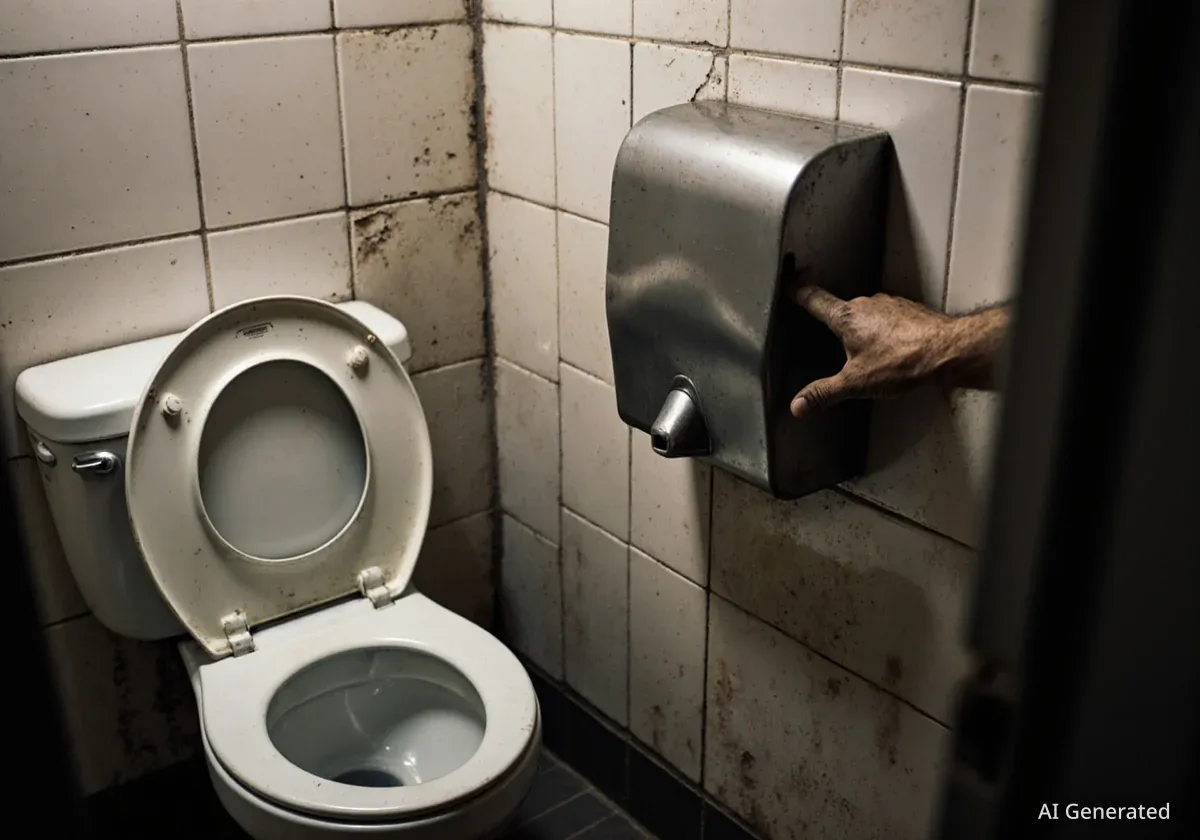
- Several bathrooms had metal toilets without seats, a violation of plumbing codes.
- The MTA has acknowledged the findings and committed to making improvements, including installing seats.
Widespread Deficiencies Uncovered
Investigators from the MTA Inspector General's office surveyed a sample of the subway system's restrooms and documented a consistent pattern of neglect. Of the 32 facilities they attempted to inspect, five were closed due to construction or other issues.
Among the 27 bathrooms that were accessible, a staggering 23 were missing at least one fundamental item. Problems ranged from empty toilet paper dispensers and soap containers to more significant structural and security flaws.
Commuters often encountered stalls with broken locks, preventing any measure of privacy. Other common issues included widespread graffiti and litter scattered across floors and surfaces, contributing to an overall unsanitary environment.
A Violation of Code and Comfort
One of the most concerning findings in the report was the prevalence of metal toilet bowls without seats. This practice was identified as a direct violation of plumbing codes and a potential public health issue.
By the Numbers
According to the audit, 85% of the open and inspected subway bathrooms were missing at least one basic amenity. The MTA operates a total of 125 public restrooms across its vast subway network.
The absence of a toilet seat not only creates an uncomfortable experience but also increases the risk of direct contact with unsanitized surfaces. The Inspector General's report highlighted this as a priority for the MTA to address.
The Commuter Perspective
For the millions of daily riders, the state of the subway bathrooms is a well-known frustration. At the busy Atlantic Avenue-Barclays Center station, many travelers expressed their reluctance to use the facilities unless absolutely necessary.
"They should have staff to keep it clean, but people also have to do their part," said Jacqueline Alvarez, a home health aide who uses the system regularly. She noted that riders also have a responsibility not to leave paper on the floor.
Observations at the station on Tuesday confirmed a pattern of cautious use. A steady stream of people approached the restrooms, but many would first crack the door open and peer inside before deciding whether to enter. The hesitation suggested a general expectation of poor conditions.
"It's not so good inside it, honestly,” said commuter Noell Gordon after cautiously inspecting the men's room at the station. Despite his assessment, he proceeded inside. "You need to free the bowel. That’s all that matters to me.”
His comment highlights the reality for many straphangers: the bathrooms are a last resort, used out of necessity rather than convenience.
A Post-Pandemic Reopening
The entire network of subway bathrooms was shut down during the COVID-19 pandemic. The MTA began a phased reopening process in January 2023, but the audit suggests that restoring full functionality and consistent maintenance remains a significant challenge.
MTA Pledges to Make Improvements
In response to the Inspector General's audit, officials at the Metropolitan Transportation Authority stated they would take action to remedy the documented failures. The agency said it would focus on installing toilet seats where they are missing and improve communication with the public about restroom availability.
An MTA spokesperson acknowledged the report and pointed to recent efforts to upgrade facilities with new tiles, modern fixtures, and fresh coats of paint as signs of progress.
"We’re grateful to the inspector general for recognizing this progress, as we seek to continuously improve the customer experience,” MTA spokesperson Joana Flores said in a statement. The agency has committed to addressing the specific shortcomings identified in the audit.
Interestingly, the men's room at the Atlantic Avenue-Barclays Center station on Tuesday was equipped with wholesale hand soap, toilet paper, and a toilet seat. Even the hand dryer was functional, suggesting that conditions can vary significantly from day to day and location to location. However, the audit's findings indicate that such fully-stocked facilities are the exception, not the rule, across the system.