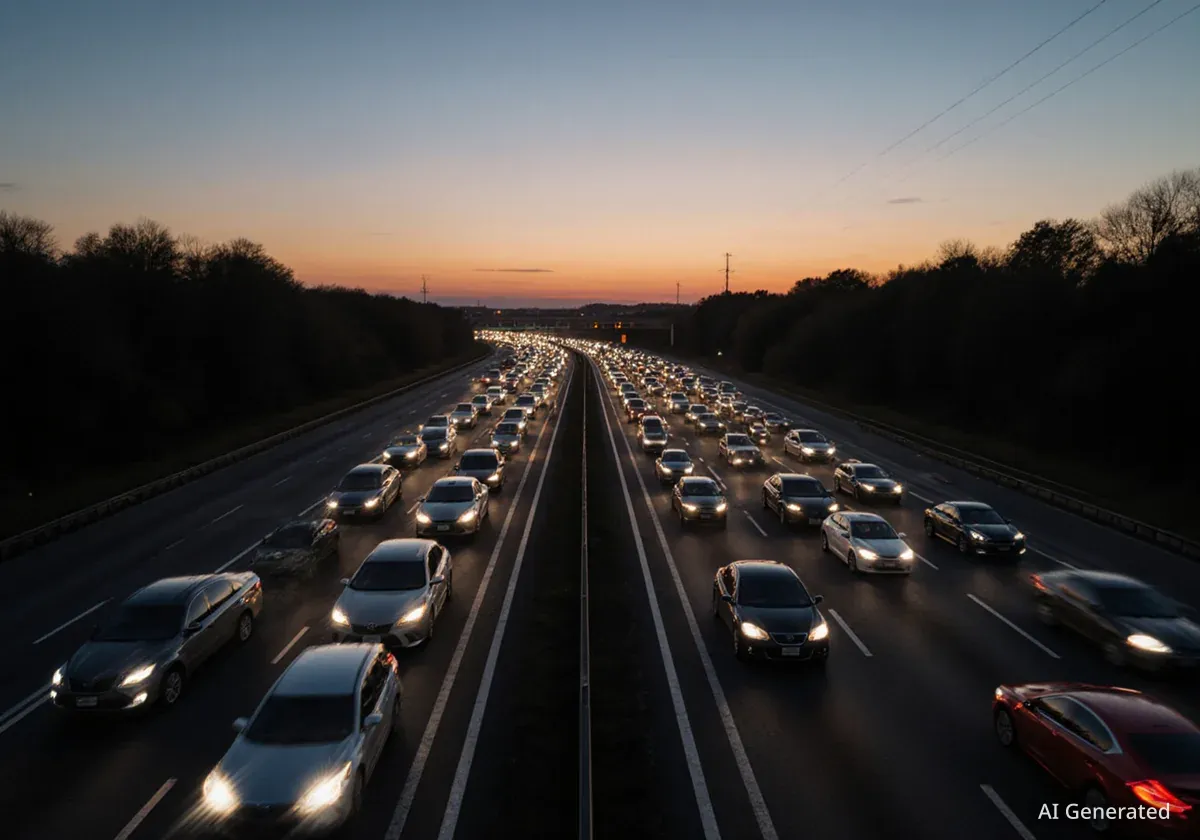
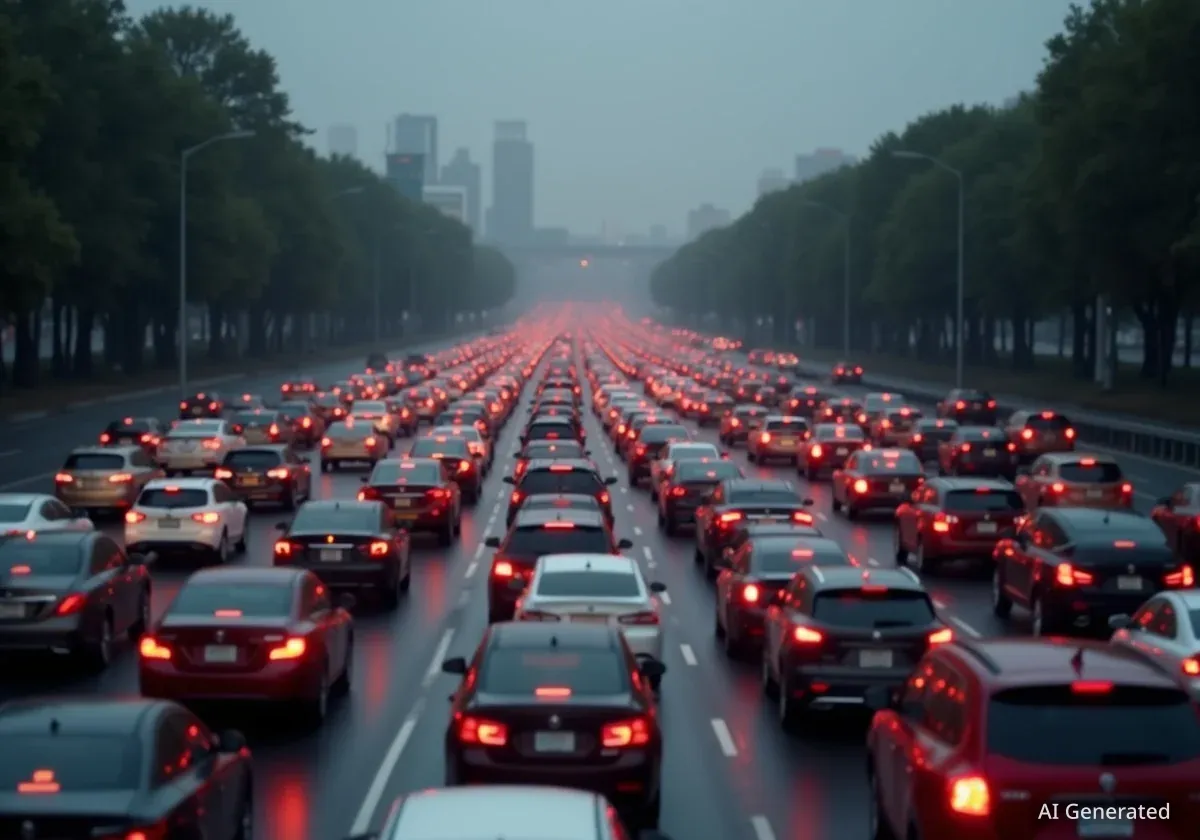
Chicago drivers experienced the worst traffic congestion in the United States over the past year. A new report indicates that the city has surpassed New York, with residents losing significant time and money due to gridlock on its roadways.
Key Takeaways
- Chicago drivers lost 112 hours in traffic over the last year.
- This lost time cost drivers over $2,000 annually.
- Chicago now ranks ahead of New York in US congestion.
- Several Chicago expressways are among the most congested nationally.
Chicago's Traffic Challenges Intensify
Chicago has officially taken the top spot as the most congested city in America. This new ranking comes from the Inrix Scorecard, released this week. The city's traffic issues have become more severe, moving it past previous leader New York City.
Drivers in Chicago spent an average of 112 hours stuck in traffic during the last year. This equates to nearly five full days of lost time. This figure represents a 10-hour increase compared to previous years, contributing to Chicago's rise in the rankings.
Traffic Cost
The financial impact of this congestion is substantial. The Inrix Scorecard estimates that the lost time in traffic costs Chicago drivers more than $2,000 per year.
Global Perspective on Congestion
While Chicago leads the U.S., its global ranking also highlights the severity of its traffic problems. On a worldwide scale, Chicago is among the most congested cities, though it does not hold the top position.
According to Inrix, Chicago currently trails Istanbul and Mexico City in the global traffic congestion index. New York and Philadelphia complete the top five most congested cities internationally, following Chicago.
"The increase in lost time for Chicago drivers is a clear indicator of growing urban mobility challenges," an industry analyst stated. "This trend affects not only daily commutes but also the local economy."
Major Highways Face Significant Delays
A primary factor contributing to Chicago's high congestion ranking is its highly trafficked highway system. Several of the city's expressways are among the busiest in the entire country, leading to extended delays for commuters.
Earlier this year, another Inrix report specifically detailed the most congested highways. The outbound Stevenson Expressway, between the Dan Ryan Expressway and Cicero Avenue, ranked as the fifth-most congested highway in America. Drivers on this section of road lose approximately 79 hours each year.
Understanding Traffic Rankings
Traffic congestion rankings are typically based on factors like average speed, delay times, and the total number of hours drivers spend in gridlock. These metrics help urban planners and policymakers understand the scope of traffic issues and develop potential solutions.
Kennedy and Eisenhower Expressways Also Heavily Impacted
The problems extend beyond the Stevenson Expressway. Two distinct sections of the Kennedy Expressway also appear on the national list of most congested roadways. The stretch between Cicero Avenue and Ohio Street ranked as the sixth and seventh most congested in the country.
Furthermore, the inbound Eisenhower Expressway, specifically between Wolf Road and Harlem Avenue, placed ninth on the national list. Rounding out the top ten most congested highways in the U.S. is another section of the outbound Kennedy Expressway, from Ontario Street to Irving Park Road.
- Outbound Stevenson Expressway (Dan Ryan to Cicero): 79 hours lost per year.
- Kennedy Expressway (Cicero to Ohio): Ranked 6th and 7th nationally.
- Inbound Eisenhower Expressway (Wolf Road to Harlem): Ranked 9th nationally.
- Outbound Kennedy Expressway (Ontario to Irving Park): Ranked 10th nationally.
These figures underscore the daily struggles faced by thousands of Chicago commuters. The widespread nature of the congestion across multiple major routes points to a systemic challenge for the city's transportation infrastructure.
Looking Ahead
The new data presents a clear picture of Chicago's escalating traffic issues. City planners and transportation authorities will need to address these challenges to reduce commuter delays and the economic burden on residents. Solutions may involve infrastructure improvements, public transit enhancements, or traffic management strategies to alleviate the daily gridlock.