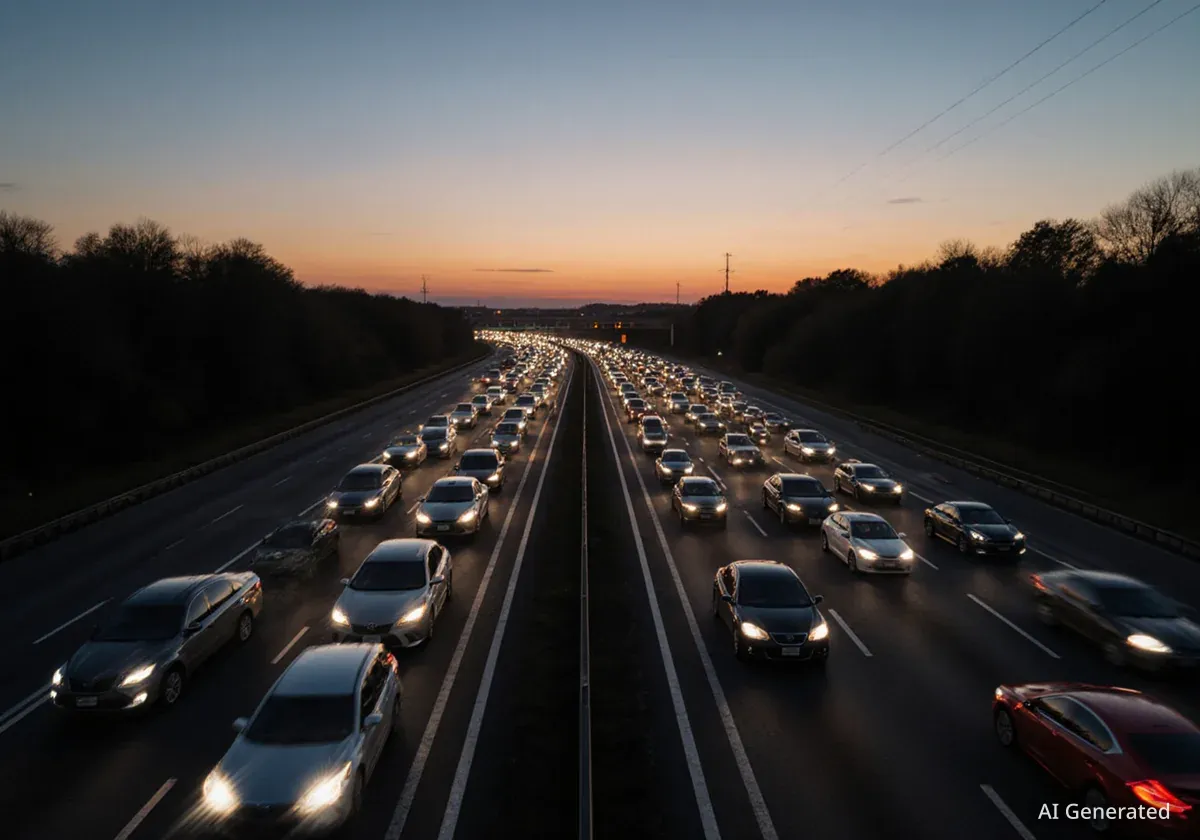
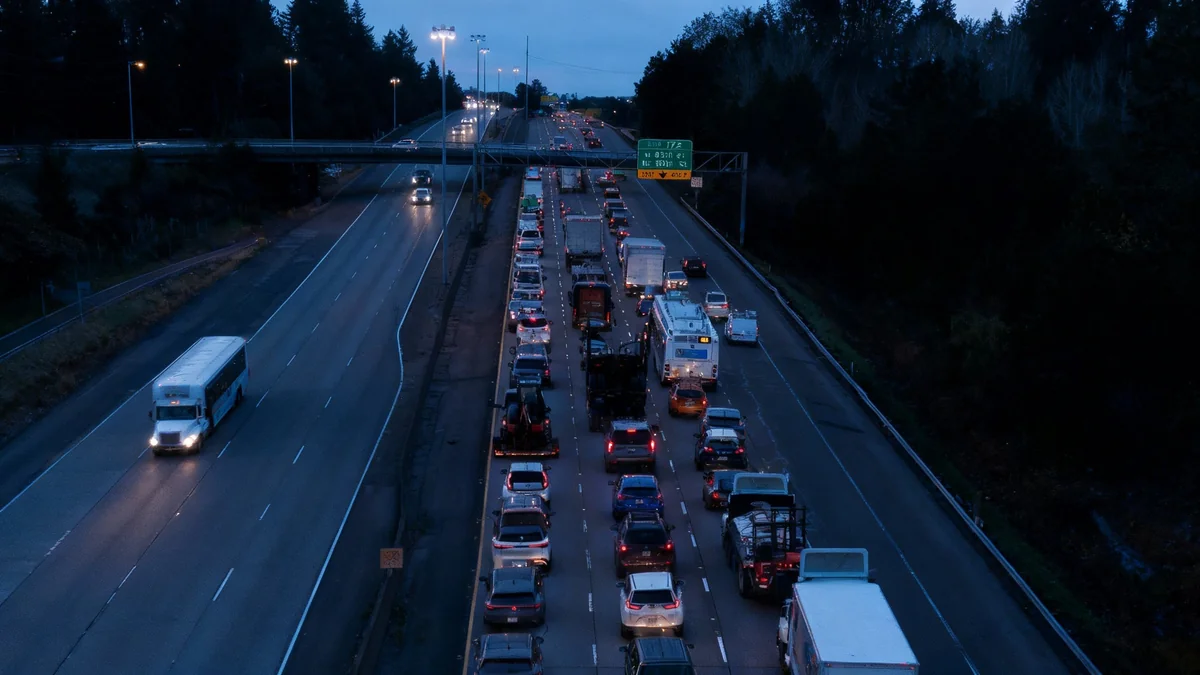
Seattle drivers spent more time in traffic during 2025 than the year before, according to a recent global traffic index. The city now ranks as the seventh most congested in the United States, a decline from its eighth-place standing in 2024.
This increased congestion means that trips took nearly one and a half times longer than they would under free-flow conditions. The average congestion level reached approximately 45% throughout the year.
Key Takeaways
- Seattle ranked seventh among US cities for traffic congestion in 2025.
- Congestion levels increased by about 2.5 percentage points from 2024.
- Drivers spent 45% more time on average commuting due to traffic.
Understanding Seattle's Congestion
The latest data from the TomTom Traffic Index highlights a growing problem for commuters in the Seattle metropolitan area. The 45% average congestion level in 2025 signifies a significant increase compared to the previous year. In 2024, the city's congestion level was lower, placing it one spot further down the national ranking.
This metric indicates how much longer travel times are during congested periods compared to uncongested conditions. For instance, a 30-minute trip in free-flow traffic would take about 43.5 minutes on average in Seattle's 2025 conditions.
Traffic Fact
Seattle's congestion level in 2025 was approximately 45%, an increase of about 2.5 percentage points from 2024.
Impact on Daily Life
The worsening traffic directly affects the daily lives of thousands of residents. Commute times lengthen, impacting work schedules, personal time, and overall quality of life. Businesses also face challenges with logistics and employee punctuality.
Longer commutes often lead to increased fuel consumption, contributing to higher costs for drivers and greater environmental impact. The additional time spent stationary in traffic also creates more stress for individuals.
Comparing National Trends
While Seattle's situation has worsened, it is part of a broader national trend in many urban centers. Cities across the U.S. grapple with increasing populations and limited infrastructure capacity. This combination often leads to more vehicles on the road without corresponding improvements in traffic flow.
Seattle's rise to seventh place underscores the persistent challenges urban planners face. Effective solutions often require a multi-faceted approach, including public transportation improvements, infrastructure upgrades, and smart traffic management systems.
“The consistent rise in Seattle's traffic congestion points to a critical need for integrated urban planning and robust public transit investment,” stated a local urban planning expert.
Potential Solutions and Future Outlook
Addressing traffic congestion requires a combination of strategies. Expanding public transit options, such as bus and light rail services, can reduce the number of single-occupancy vehicles on the road. Investing in infrastructure, like dedicated bus lanes or improved highway interchanges, can also help.
Furthermore, promoting remote work options and staggered work hours could help distribute traffic demand more evenly throughout the day. Smart traffic signal technology, which adapts to real-time traffic flow, is another tool cities can employ.
Context on Traffic Indexes
Traffic indexes typically analyze billions of GPS data points from vehicles and navigation devices to calculate congestion levels. They compare actual travel times to free-flow conditions, offering a comprehensive view of traffic patterns and their impact.
The Role of Urban Development
Seattle has experienced significant population growth and economic development in recent years. This growth often brings more residents and jobs, increasing the demand on existing transportation networks. New construction projects can also temporarily disrupt traffic flow, adding to the problem.
The balance between urban expansion and maintaining efficient transportation is a constant challenge for city authorities. Without careful planning, rapid development can quickly overwhelm infrastructure.
- Population Growth: More residents mean more commuters.
- Economic Activity: Increased jobs attract more people to the city.
- Infrastructure Lag: Road and transit improvements often struggle to keep pace with growth.
Long-Term Implications
Continued worsening traffic can have long-term implications for a city's economy and livability. Businesses might find it harder to attract and retain employees if commutes are excessively long. The city's appeal as a place to live can also diminish.
For Seattle, the latest ranking serves as a clear indicator that current approaches may not be sufficient to manage the growing traffic challenge effectively. City planners and policymakers face increasing pressure to implement sustainable solutions that can handle future growth while improving daily commutes for residents.
The data underscores the urgent need for comprehensive transportation strategies. These strategies must look beyond individual road projects to encompass a holistic view of urban mobility, integrating public transit, active transportation, and smart technology.
Seattle's experience mirrors that of many other rapidly growing cities. Learning from these trends and proactively investing in infrastructure and alternative transportation methods will be crucial to avoiding further declines in traffic flow and quality of life.