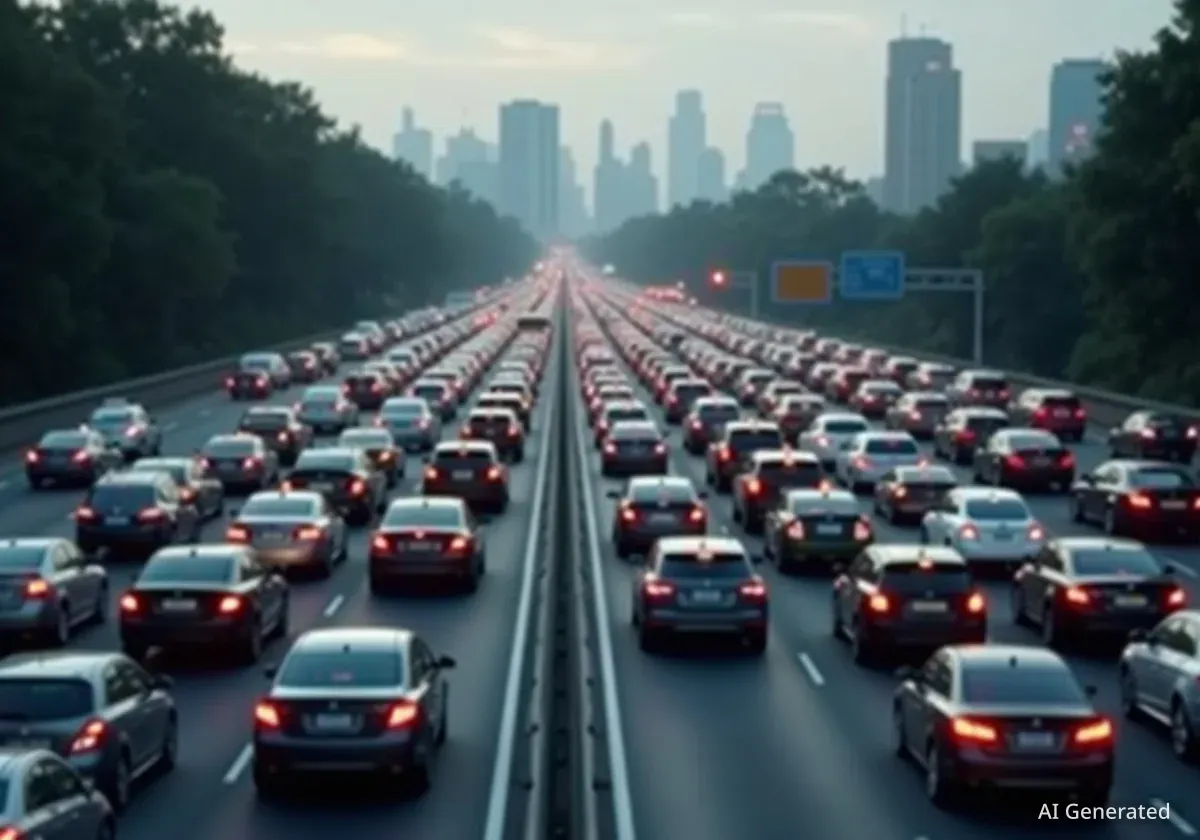
Drivers in the Washington D.C. metropolitan area experienced a notable rise in traffic congestion during 2025. Data from the analytics firm INRIX indicates that commuters spent more time stuck in traffic compared to the previous year, impacting daily routines and regional productivity.
Key Takeaways
- Average D.C. driver lost 70 hours to traffic in 2025.
- This represents a 13 percent increase from 2024.
- Congestion measured by peak versus off-peak travel times.
Commuter Hours Lost on D.C. Roads
The average driver navigating the D.C. area roadways lost a significant 70 hours to traffic delays in 2025. This calculation by INRIX measures the difference between travel times during peak hours and off-peak periods, reflecting the true impact of congestion on daily commutes.
This figure marks a clear increase from the 62 hours lost in 2024. The 13 percent jump points to a worsening situation for those who drive regularly in the region.
Traffic Impact in Numbers
- 70 hours: Average time lost per D.C. driver in 2025.
- 13 percent: Increase in hours lost compared to 2024.
- Congestion: Defined as the difference between peak and off-peak travel.
Understanding the Congestion Measurement
INRIX's methodology for assessing traffic congestion focuses on the difference between travel times during the busiest periods and the least busy times. This approach provides a practical measure of how much extra time drivers must allocate for their journeys due to heavy traffic.
The increase suggests that roads are becoming more crowded, or that traffic flow management strategies are struggling to keep pace with demand. Understanding this metric is crucial for urban planners and commuters alike.
Daily Impact on Drivers
For many residents, these extra hours translate into less time for personal activities, family, or work. A 70-hour loss over a year means drivers spend nearly three full days stuck in traffic, not including their regular commute time.
This situation can lead to increased stress, higher fuel consumption, and a broader negative impact on quality of life for those living and working in the D.C. area.
Broader Context of Urban Congestion
Traffic congestion is a common challenge in major metropolitan areas worldwide. Factors contributing to this issue often include population growth, inadequate public transportation options, urban sprawl, and the design of road networks. Solutions typically involve a combination of infrastructure improvements, public transit expansion, and intelligent traffic management systems.
Looking Ahead: Potential Solutions and Challenges
The rise in traffic delays presents a significant challenge for D.C. area authorities. Addressing this issue may require a multi-faceted approach, including investments in public transportation, smart traffic light systems, and potentially encouraging alternative commuting methods such as cycling or telework.
However, implementing these solutions often involves complex planning, significant funding, and public cooperation. The trend seen in 2025 highlights an urgent need for action to prevent further increases in commuter frustration and economic impact.
Economic Implications of Increased Traffic
Beyond personal inconvenience, increased traffic has economic consequences. Businesses face delays in deliveries, employees arrive late, and the overall productivity of the region can suffer. The cost of lost time, wasted fuel, and increased vehicle wear and tear adds up significantly over time.
Effective traffic management is not just about convenience; it is a critical component of a healthy urban economy. The 2025 data serves as a clear indicator of growing pressures on the region's transportation infrastructure.
"The data from 2025 shows a clear need for renewed focus on urban mobility strategies in the D.C. area. Commuters are losing valuable time, impacting both their personal lives and the region's economic efficiency."
Local governments and transportation agencies will likely review these findings to inform future policy and infrastructure projects. The goal remains to create a more efficient and less stressful commuting experience for everyone in the D.C. metropolitan area.