Hong Kong's high-speed rail network has significantly expanded, adding 16 new destinations in mainland China. The new routes, which began ticket sales on Monday, January 12, 2026, have seen an immediate surge in demand, with many classes of seats selling out quickly for the inaugural services on January 26.
The MTR Corporation announced the network expansion on Sunday, January 11, 2026. This move aims to enhance connectivity between Hong Kong and various cities across mainland China, including both long-haul and closer regional destinations.
Key Takeaways
- Hong Kong high-speed rail added 16 new mainland China destinations.
- Tickets for new routes went on sale January 12, 2026.
- Many seats, especially business class, sold out quickly.
- First services for new routes begin January 26, 2026.
- Long-haul destinations like Nanjing are popular.
New Destinations Prove Popular
The newly added destinations include cities such as Nanjing and Wuxi in Jiangsu province, which are considered long-haul journeys. Closer cities in Guangdong and Fujian provinces are also part of the expansion. Travelers have shown a strong interest in these new routes, particularly for the first day of service.
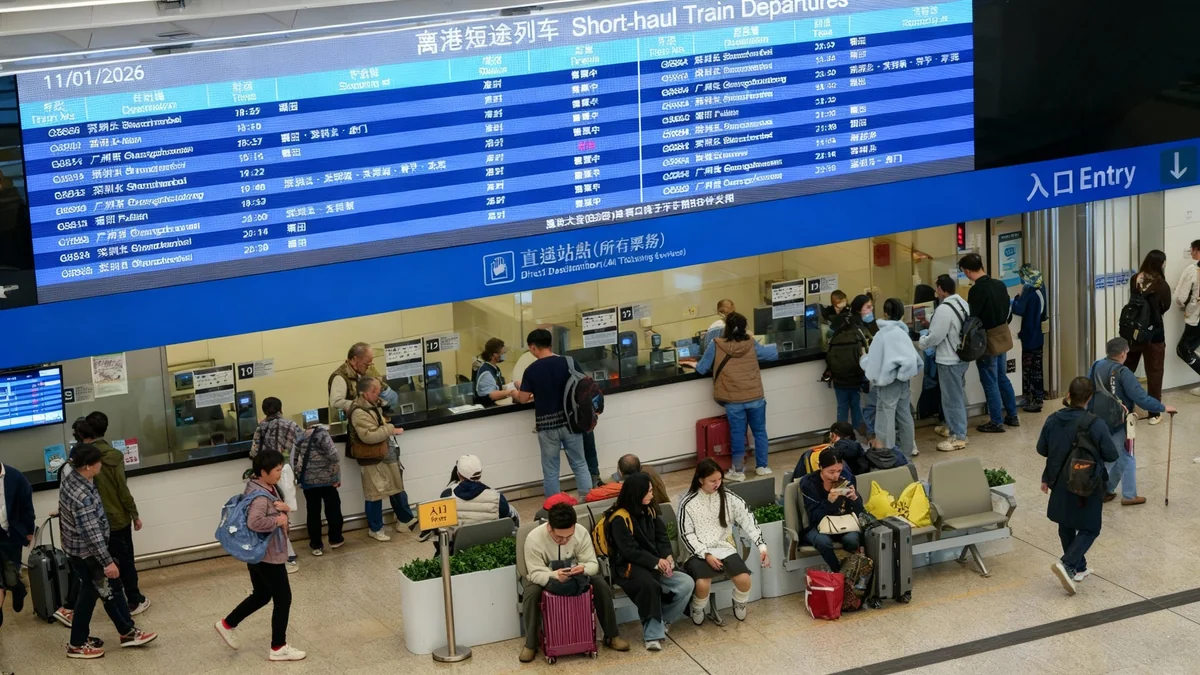
Online sales platforms experienced rapid activity. While large crowds were not observed at West Kowloon station for physical ticket purchases, digital channels saw significant traffic. This indicates a shift towards online booking for many travelers.
Quick Facts
- 16 new destinations added to the high-speed rail network.
- January 26, 2026 marks the start of services for these new routes.
- The journey to Nanjing South is estimated to take around seven hours.
Business Class Sees High Demand
Business-class tickets for the train to Nanjing South on January 26 were completely sold out by Monday afternoon. These premium seats were priced at HK$3,136 (approximately US$402.40). The high price point did not deter travelers seeking a more comfortable journey.
First-class seats for the same route also saw considerable demand. Only seven first-class tickets, priced at HK$1,628, remained available by the afternoon. This suggests a preference for higher-tier seating options on these new long-haul routes.
"The instant hit of these new routes highlights the strong demand for seamless travel between Hong Kong and mainland China," a transport analyst noted. "Travelers are clearly valuing both convenience and comfort."
Expanding Connectivity Across China
This expansion significantly broadens the reach of Hong Kong's high-speed rail, connecting it to more parts of mainland China. The new routes offer travelers more options for business and leisure. The increased connectivity is expected to boost regional exchange and tourism.
The MTR Corporation's strategy focuses on integrating Hong Kong more closely with the broader national rail network. This provides direct access to provinces previously requiring multiple transfers or alternative travel methods.
Impact on Travel Patterns
The introduction of direct high-speed rail services to cities like Nanjing and Wuxi could alter existing travel patterns. Previously, travelers might have opted for flights or slower rail services with connections. The faster, more direct high-speed option offers a compelling alternative.
The seven-hour journey to Nanjing South demonstrates the capability of the high-speed network to cover significant distances efficiently. This makes day trips or short breaks to these cities more feasible for Hong Kong residents and visitors.
Background on High-Speed Rail
High-speed rail has become a cornerstone of modern transportation in China, known for its efficiency and extensive network. Connecting major economic hubs and tourist destinations, it offers a fast and reliable way to travel across vast distances. Hong Kong's integration into this network began several years ago, and this latest expansion further solidifies its role as a key gateway.
Future Outlook for High-Speed Travel
The strong initial sales suggest a promising future for these expanded high-speed rail services. The MTR Corporation may consider further expansions or increased frequencies on popular routes if demand remains high. This trend aligns with a broader push for greater regional integration.
Travelers are increasingly looking for convenient and time-efficient options. High-speed rail often provides a comfortable experience, avoiding airport security lines and offering scenic views. This combination makes it an attractive choice for many.
- Enhanced regional economic ties.
- Increased tourism opportunities.
- Reduced travel times between cities.
- Greater choice for passengers.
The success of these new routes underlines the growing preference for high-speed rail as a primary mode of inter-city transport in the region. Authorities will likely monitor passenger numbers closely to inform future planning and service adjustments.