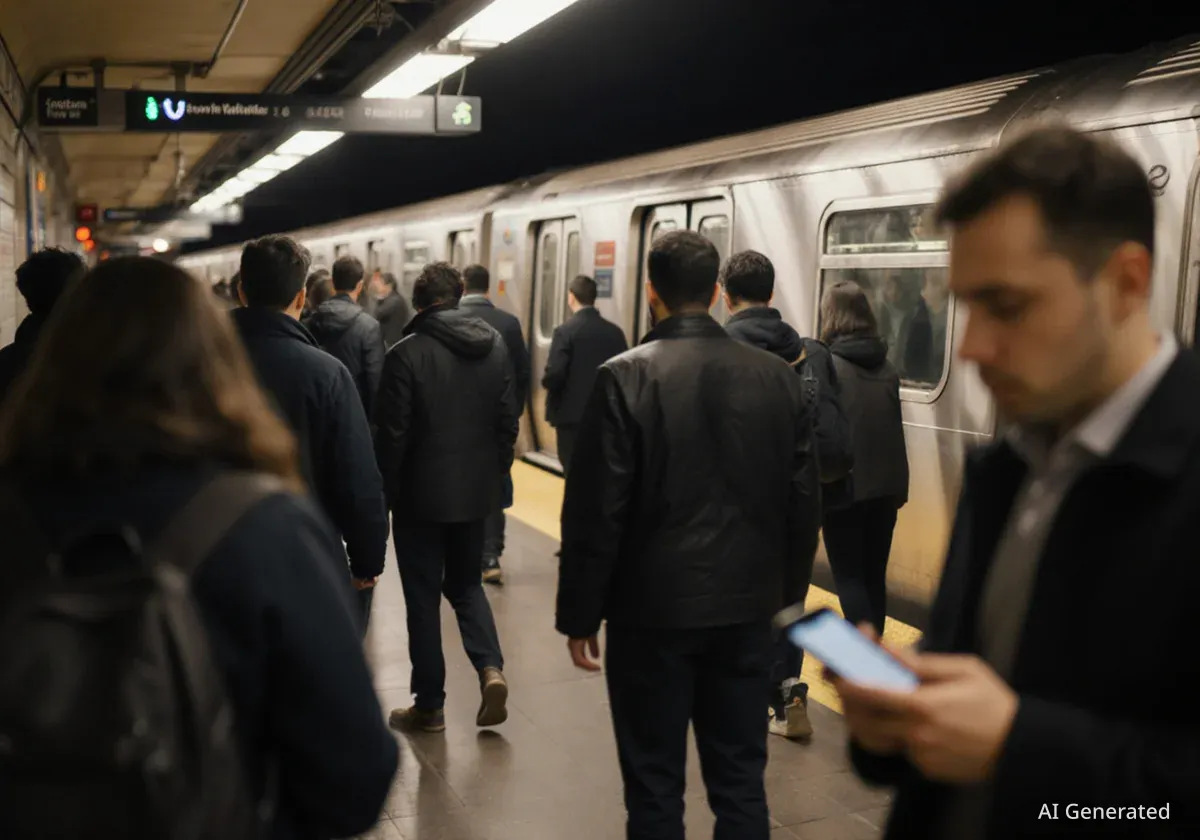
New York City is facing a pivotal decision regarding its transit future. A new report suggests that an annual investment of $1 billion, the same cost as making bus service free, could fund a transformative expansion of the subway and elevated transit network. This proposal aims to add over 40 miles of new lines across the city over the next four decades.
The research, titled "A Better Billion," comes from the Transit Costs Project at the NYU Marron Institute of Urban Management. It outlines a vision for significant infrastructure development, including long-anticipated projects and new routes into underserved neighborhoods.
Key Takeaways
- New report proposes 41 miles of new subway and elevated lines over 40 years.
- Annual investment of $1 billion, matching the estimated cost of free bus service.
- Projects include LaGuardia Airport connection and Second Avenue Subway extension.
- Expected to create 167,000 new homes without zoning changes.
- Focus on lower construction costs through smaller stations and elevated lines.
A Transformative Transit Vision
The report directly challenges the idea of free bus service as the city's primary transit improvement. Eric Goldwyn, the lead author of the report, believes that simply making buses free is not a transformative idea. Instead, he argues that expanding the transit network will have a more meaningful impact on transportation and housing affordability.
Goldwyn stated,
"Free buses are an idea. It’s just not that big of an idea. It’s not a transformative idea. If you want to have a meaningful impact on transportation, it’s really about extending the network and allowing more housing to be built around it."
Historically, subway construction in New York City has been very expensive. The first phase of the Second Avenue Subway, which opened in 2017, cost $2.5 billion per mile. Phase two is projected to exceed $4 billion per mile. However, the new report suggests that future projects could be built for significantly less.
Fact: Construction Costs
The report estimates an average cost of just over $1 billion per mile for the proposed 41 miles of new transit service. This includes some federal matching funds.
Connecting Underserved Communities
The proposed plan includes 12 distinct projects. Many of these focus on extending subway service into dense, working-class neighborhoods in Queens that currently lack direct subway access. Areas like East Flushing, Queens Village, and Laurelton are specifically mentioned.
Goldwyn highlighted the need for this expansion, saying,
"Queens has seen so much population growth since the subway stopped being built, so there needs to be a lot of Queens action."
Another key project involves extending the 5 Train down Utica Avenue in Brooklyn. This would serve the East Flatbush neighborhood, an area identified as needing subway service since 1929. To reduce costs, half of this line would be elevated, saving an estimated $1.8 billion compared to tunneling.
Rethinking Elevated Lines
Elevated trains have often faced public resistance due to their visual and noise impacts. However, the report argues that modern elevated lines can be designed differently. Goldwyn noted that New York's existing elevated lines use older technology. New construction could address these concerns.
Current Transit Landscape
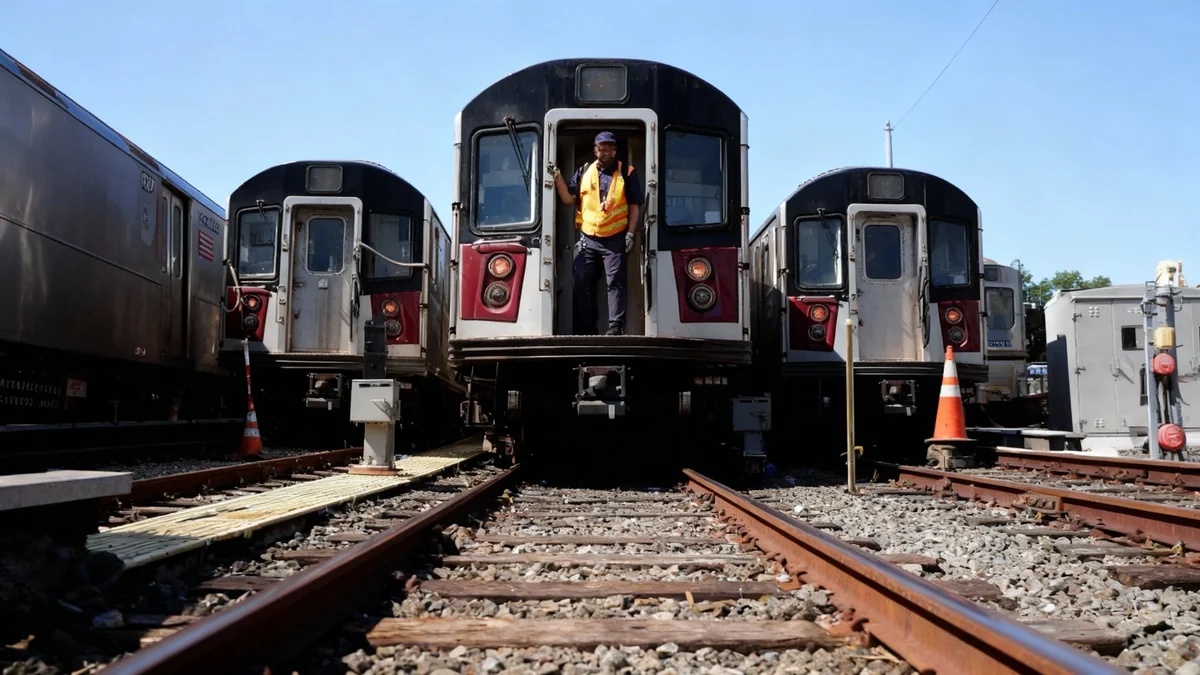
New York's Metropolitan Transportation Authority (MTA) is already undertaking significant expansion efforts. These include the second phase of the Second Avenue Subway and planning for the Interborough Express light rail line. Federal funding, however, remains a challenge, with funds for major projects currently frozen.
Innovative Cost-Saving Measures
To achieve the ambitious goal of 41 new miles for $48 billion, the report proposes several cost-saving strategies. These include building smaller, shallower stations. Instead of mining from within a tunnel, stations could be excavated from the street level. Maximizing elevated guideways over underground tracks is another key recommendation.
For example, the report estimates the 125th Street extension of the Second Avenue Subway could cost $3.4 billion. The MTA's own feasibility study for this project suggests a cost of $7.7 billion. Goldwyn believes his proposed methods can significantly reduce this price difference.
- Smaller station footprints
- Excavating stations from street level
- Prioritizing elevated tracks over tunnels
- Reducing the length of tail tracks at line ends
Housing and Affordability Impact
The report emphasizes the link between subway expansion and housing affordability. Researchers estimate that the proposed transit projects could spur the development of an additional 167,000 new homes. This would occur without any changes to current zoning laws.
Goldwyn described this as a conservative assumption. He suggested that coupling new subway stations with higher-density zoning could lead to even greater housing development. This approach mirrors New York City's historical growth model.
"The value of the subway is that it is so much faster and so much higher capacity that people can trade off distance for time," Goldwyn explained. "New York’s history bears that out. A lot of the big building booms are preceded by the expansion of the subway."
Industry Reactions and Future Steps
While the report presents a compelling vision, some transit advocates express skepticism about achieving the proposed cost reductions. Danny Pearlstein, communications director for Riders Alliance, supports subway expansion but acknowledges the challenge of building at these price points.
Pearlstein commented,
"Ideally, one day, we are able to build a mile a year, and it will only cost a billion dollars. But that vision is far more aspirational than free buses."He suggests that free fares could help more New Yorkers more quickly and has broad political appeal.
Kate Slevin, executive vice president of the Regional Plan Association, also raised concerns about the cost estimates. However, she found the report's overall message "thought provoking." Slevin believes a detailed analysis of free bus service impacts and alternatives is necessary before the city moves forward.
The debate over how New York City should invest its transit funds continues. This report provides a new perspective, suggesting that long-term infrastructure expansion could offer greater benefits than immediate fare relief.