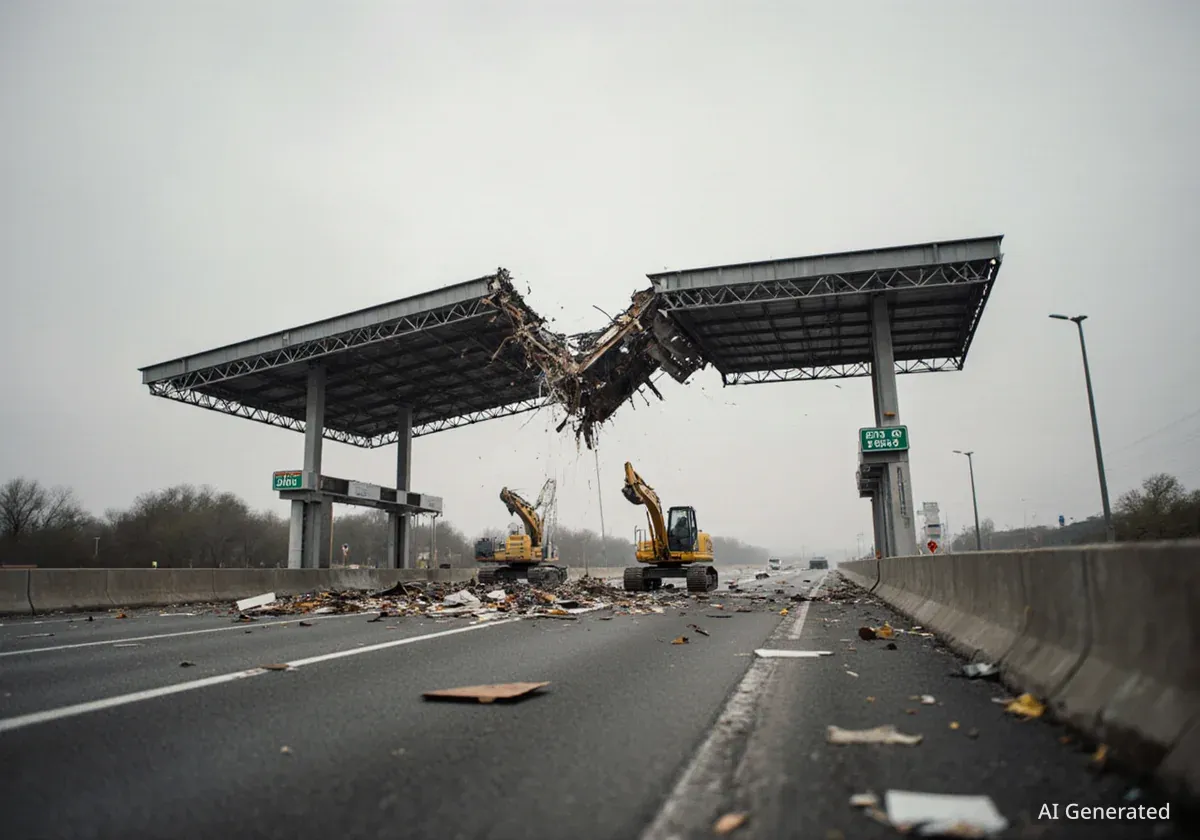
The Pennsylvania Turnpike's Downingtown interchange has reopened to traffic following a canopy collapse over the toll booths. The incident occurred on Wednesday afternoon as crews were preparing the plaza for demolition. Emergency services responded quickly to the scene.
Key Takeaways
- Downingtown Turnpike interchange is fully reopened.
- Canopy collapse happened during demolition preparation.
- Incident is linked to the transition to open road tolling.
- Old toll booths and canopy have been removed.
Demolition Work Leads to Collapse
The collapse happened during ongoing work to convert the toll plaza. Crews were on site to prepare the area for demolition. This preparation is part of a larger project to modernize the Pennsylvania Turnpike's toll collection system.
The canopy, which previously covered the toll booths, fell unexpectedly. Fortunately, no serious injuries were reported. The immediate area was secured following the incident, and an investigation into the exact cause is likely to follow.
Fact: Open Road Tolling
Open road tolling allows drivers to pass through toll points without stopping. Tolls are collected electronically, either via E-ZPass transponders or through a 'Toll By Plate' system where invoices are mailed to vehicle owners.
Transition to Open Road Tolling
The work at Downingtown is part of the Pennsylvania Turnpike Commission's statewide shift to open road tolling. This system aims to improve traffic flow and reduce congestion. Drivers will no longer need to stop at traditional toll booths once the transition is complete across all interchanges.
The new system relies on overhead gantries equipped with sensors and cameras. These devices read E-ZPass transponders or capture license plate images. This change eliminates the need for physical toll plazas, streamlining the travel experience for millions of commuters.
"The move to open road tolling represents a significant modernization for the Pennsylvania Turnpike. It is designed to make travel smoother and more efficient for everyone," a representative indicated.
Impact on Commuters
For drivers, the shift means a quicker journey through toll points. It also removes the physical barrier of toll booths, which often caused bottlenecks during peak travel times. The goal is to reduce overall travel times and enhance safety by removing potential stopping points on the highway.
While the transition involves temporary construction and occasional disruptions, the long-term benefits are expected to outweigh these inconveniences. The Downingtown interchange serves a significant volume of traffic daily, making its modernization a key component of the overall project.
Cleanup and Restoration Efforts
Following the collapse, crews worked quickly to clear the debris. Both the collapsed canopy and the old toll booths were removed from the site. This expedited cleanup allowed for the prompt reopening of the interchange, minimizing disruption to local traffic.
Background: Turnpike Modernization
The Pennsylvania Turnpike has been undergoing extensive modernization projects for several years. These initiatives include infrastructure upgrades, technological enhancements for toll collection, and efforts to improve safety and efficiency across its vast network. The shift to open road tolling is a major component of this comprehensive plan.
The quick response highlights the importance of maintaining traffic flow on major arteries like the Pennsylvania Turnpike. Authorities ensured that the area was safe for travel before allowing vehicles to pass through again. This incident underscores the complexities involved in major infrastructure upgrades.
- Traffic Flow: Open road tolling is projected to reduce congestion by 15-20% at busy interchanges.
- Efficiency: Electronic toll collection can process vehicles much faster than manual or coin-based systems.
- Safety: Eliminating stopping points on high-speed roads can reduce the risk of rear-end collisions.
- Environmental Impact: Less idling at toll booths means reduced vehicle emissions.
The Pennsylvania Turnpike Commission continues to implement these changes across its system. The goal is to complete the full transition to open road tolling in the coming years. This will mark a new era for travel on one of the state's most vital transportation networks.