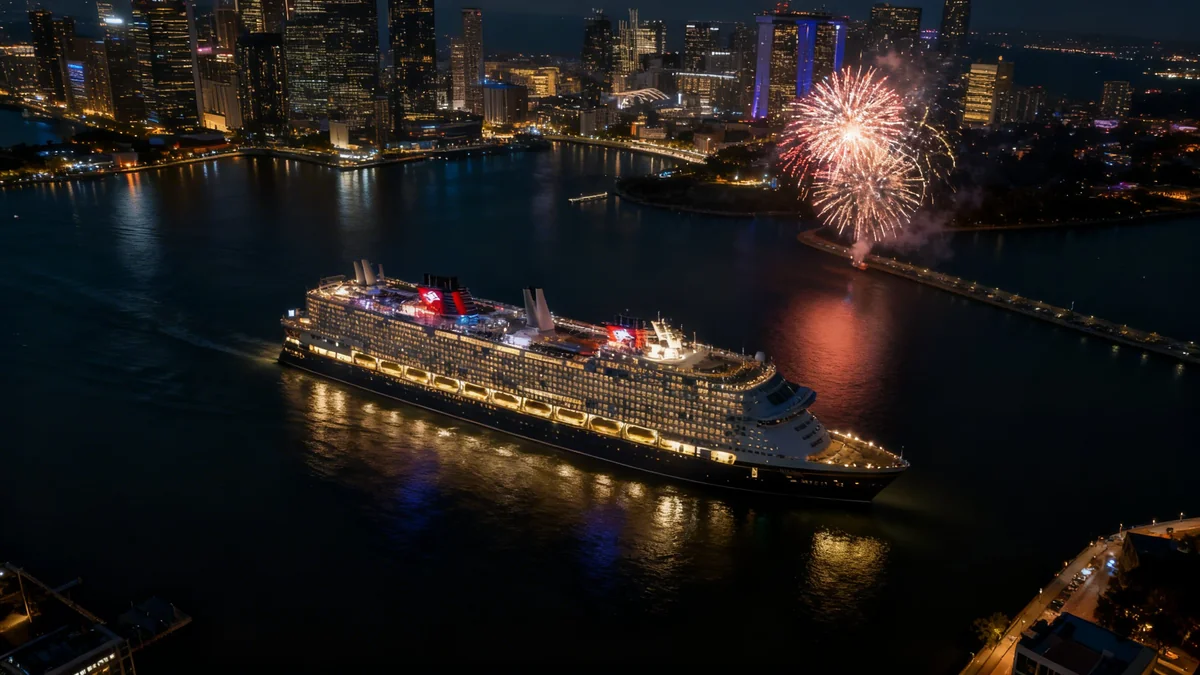

A cruise ship passenger recently faced a significant fine of $1,150 in Canada after failing to declare a large amount of cash upon entry. The incident, involving a traveler from India on the Enchanted Princess, highlights crucial border regulations that many international visitors may not know. This event serves as a reminder for all travelers to understand and comply with customs rules in every country they visit.
Key Takeaways
- A cruise passenger was fined $1,150 for not declaring US$23,000 in cash.
- Canada requires declaration of C$10,000 or more in cash or monetary instruments.
- The fine can range from 5% to 50% of the undeclared amount.
- Travelers must research customs rules for all ports of call.
Incident Details at Saint John Port
On September 3, a traveler from India arrived in Saint John, New Brunswick, aboard the Enchanted Princess cruise ship. During routine border checks conducted by the Canada Border Services Agency (CBSA), officers discovered US$23,000 in cash in the passenger's luggage. The individual had not declared this sum.
The cruise ship had just docked in Saint John, a seaport city situated on the Bay of Fundy, when CBSA officers initiated standard customs procedures. These checks are mandatory for all passengers, regardless of whether they plan to disembark.
"CBSA officers in #SaintJohn #NB seized US$23K in undeclared cash from a traveller arriving on a cruise ship. The traveller paid a penalty in order to have the funds returned. Entering Canada with CAN$10K or more? Remember to declare it."
— Canada Border Services Agency (CBSA) via X
The passenger was subsequently issued a penalty of $1,150. This fine represented 5% of the undeclared US$23,000. Authorities often apply a lower percentage fine when it appears the traveler was unaware of the regulations rather than intentionally trying to evade them.
Quick Fact
The US$23,000 undeclared cash was equivalent to approximately C$31,900 on the date of the incident, far exceeding Canada's declaration threshold.
Canadian Cash Declaration Rules
Canada does not restrict the total amount of money travelers can bring into the country. However, there is a strict rule regarding declaration. Any person entering Canada with C$10,000 or more, or its equivalent in foreign currency, must declare it to the CBSA.
As of September 30, C$10,000 was approximately equivalent to US$7,186. The amount the Indian passenger carried, US$23,000, was well above this limit. Failure to declare amounts equal to or exceeding C$10,000 can lead to significant penalties.
The penalties for non-declaration range from 5% to 50% of the undeclared funds. The specific percentage depends on various factors, including the traveler's intent and previous compliance history. In this case, the 5% fine suggests the CBSA believed the passenger's failure to declare was due to a lack of awareness.
Why Declare Large Sums?
Declaring large amounts of cash helps combat money laundering, terrorist financing, and other illegal activities. It is a standard practice in many countries to monitor the flow of currency across borders.
How to Declare Cash and Avoid Fines
Cruise passengers planning to visit multiple countries must research the specific cash declaration rules for each port of call. Regulations vary significantly from one country to another. For example, while Canada's threshold is C$10,000, the United States also requires declaration for US$10,000 or more, and Australia's limit is AUD10,000 or more.
Declaration Thresholds by Country
- Canada: C$10,000 or more
- U.S.: US$10,000 or more
- Australia: AUD10,000 or more
To declare large sums of money, travelers typically need to complete a form such as the Cross-Border Currency or Monetary Instruments Report. These forms are often available on the cruise ship or can be obtained directly from customs officers at the port of entry.
It is always advisable to complete these documents before reaching customs to ensure a smooth process. If a traveler is unsure whether an item or amount of money needs to be declared, the best course of action is to ask a CBSA officer for clarification. A simple question can prevent substantial fines and delays.
Beyond Cash: Other Declarable Items
Cash is not the only item that travelers must declare at customs. Many countries have strict rules about other goods, including firearms, certain foods, plants, and high-value merchandise. For instance, both Canada and the U.S. require the declaration of firearms.
Travelers should always review the customs regulations for all destinations on their itinerary well in advance of their trip. This proactive approach helps ensure compliance and avoids unexpected penalties that can significantly impact a travel budget.
Understanding and adhering to border regulations is a fundamental aspect of international travel. Incidents like the one in Saint John highlight the importance of being fully informed about customs requirements to prevent costly mistakes.