
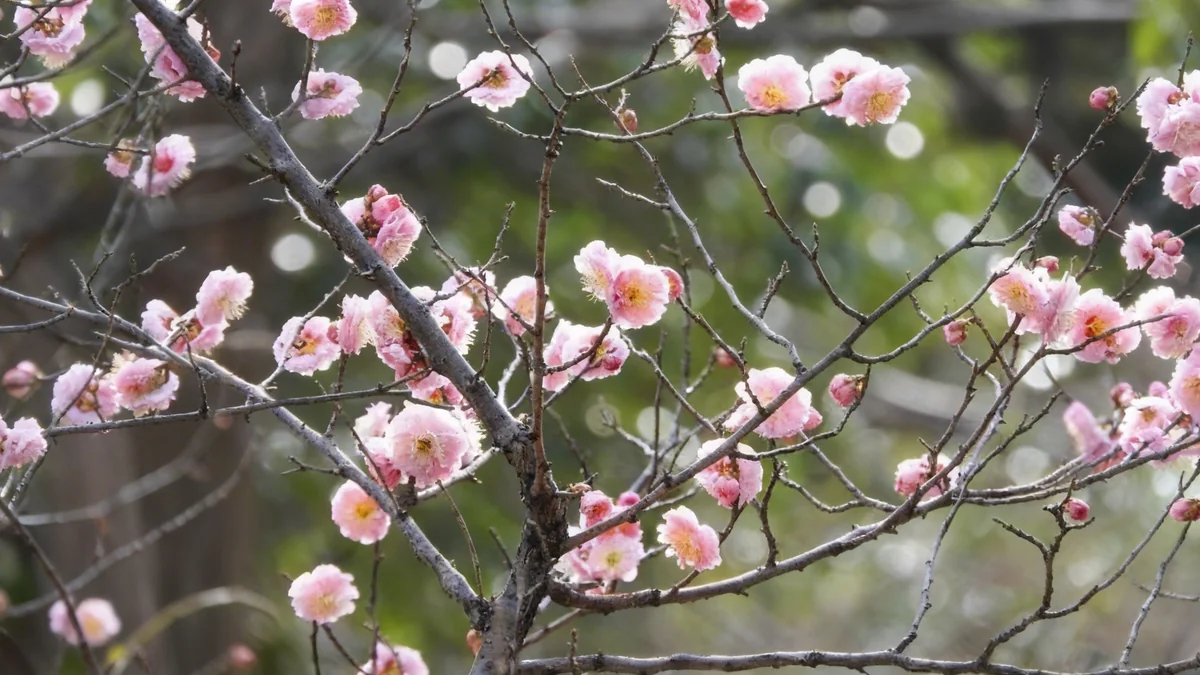
As winter's chill begins to recede, Japan is welcoming the early signs of spring with the blooming of its plum blossoms, known as ume no hana. These resilient flowers often appear before their more famous cherry blossom counterparts, bringing vibrant color to gardens and temples even when snow still dusts the branches. This year, several iconic locations across the country are offering unique ways to experience the beauty of these early blooms.
Key Takeaways
- Plum blossoms are blooming across Japan, offering an early taste of spring.
- Five major locations in Yokohama, Kamakura, Osaka, Mito, and Kyoto are highlighted for viewing.
- Special events, illuminations, and cultural experiences enhance the viewing season.
- Plum blossoms, or ume no hana, often bloom before cherry blossoms.
Sankeien Garden: A Historic Yokohama Display
Yokohama's Sankeien Garden, established in 1906, hosts over 500 plum trees. The collection includes rare varieties such as gairyubai, present since the garden's opening, and ryokugakubai, a gift from Shanghai in 1977. This year, a special plum blossom-viewing event runs from February 7 to March 3. Visitors can participate in haiku contests, traditional tea ceremonies, and a plum bonsai exhibition.
On Saturdays and Sundays during this period, the garden provides free hot mugicha (barley tea). This allows guests to warm themselves while enjoying a leisurely stroll through the historic grounds. The beauty of Sankeien has even inspired literary figures, including the Japanese writer Ryunosuke Akutagawa.
Plum Blossom Facts
- There are over 500 plum trees in Sankeien Garden.
- The garden features rare cultivars like gairyubai and ryokugakubai.
- Special events include haiku contests and tea ceremonies.
Hasedera Temple: Kamakura's February Spectacle
Kamakura's Hasedera Temple is well-known for its hydrangeas in summer. However, in February, its grounds transform with a stunning display of plum blossoms. The temple cultivates eight different plum varieties, ensuring a continuous bloom throughout the season. Some varieties flower earlier, while others bloom later, creating a dynamic visual experience.
From February 6 to 15, Hasedera Temple held a nighttime illumination event. This special viewing allowed visitors to appreciate the blossoms under soft lights, highlighting their delicate beauty in a unique setting.
Osaka Castle Park: A Metropolitan Bloom
Osaka Castle Park offers a grand setting for plum blossom viewing within metropolitan Osaka. Between January and March, the park showcases 1,245 plum trees, encompassing 105 distinct cultivars. This extensive collection provides a prolonged viewing period for visitors.
Early bloomers like shirakaga, ryokugaku, and nanko (often used to make umeboshi) are visible until mid-February. These are then followed by varieties such as bungo and musashino, which continue to bloom through March. For a luxurious experience, the neighboring Hotel New Otani Osaka offers a lunch course. Guests can enjoy their meal while overlooking the plum-filled scenery after a stroll through the park.
"The sheer variety of plum blossoms at Osaka Castle Park creates a continuous spectacle, transitioning from one beautiful display to the next," said a park spokesperson.
Umeboshi Connection
The nanko plum variety, prominently featured at Osaka Castle Park, is frequently used to make umeboshi. These are pickled plums, a popular and traditional Japanese condiment known for their distinctive sour and salty taste.
Kairakuen Garden: One of Japan's Great Gardens
Kairakuen Garden in Mito, Ibaraki Prefecture, holds the distinction of being one of Japan's Three Great Gardens. Feudal lord Nariaki Tokugawa developed the garden, and it was opened to the public in 1842, a progressive move for its time. The garden's "UME The Lights 2026" event runs on Fridays, Saturdays, and Sundays between February 13 and March 15.
During this event, the plum trees are illuminated with a spectrum of colors and projection mappings. A notable feature is the "Layered Colors Garden," designed to specifically highlight the beauty of the blooming plums. This modern artistic display offers a fresh perspective on the traditional plum blossom viewing.
Kitano Tenmangu Shrine: Kyoto's Plum Legacy
Kyoto's Kitano Tenmangu Shrine is deeply connected to plum blossoms. Sugawara no Michizane, a scholar and poet from the Heian era (794-1185) enshrined here, was known for his love of these flowers. Today, approximately 1,500 plum trees across 50 cultivars adorn the shrine grounds, creating a vibrant display each year.
This year, the shrine is part of the Kyoto Nippon Festival 2026, from February 1 to May 24. This collaboration features photographer Mika Ninagawa, celebrated for her vivid floral imagery. Ninagawa has installed special exhibits, including "Garden of Light and Flowers" and "Afterglow," providing an artistic interpretation of the blossoms.
- Sankeien Garden, Yokohama: Over 500 trees, special events, free barley tea.
- Hasedera Temple, Kamakura: Eight varieties, past nighttime illuminations.
- Osaka Castle Park, Osaka: 1,245 trees, 105 cultivars, diverse blooming periods.
- Kairakuen Garden, Mito: One of Japan's Three Great Gardens, "UME The Lights" event.
- Kitano Tenmangu Shrine, Kyoto: 1,500 trees, 50 cultivars, art collaboration.
These locations offer diverse experiences, from historic gardens to temple grounds and urban parks. Each provides a unique opportunity to witness the early beauty of Japan's plum blossom season.