
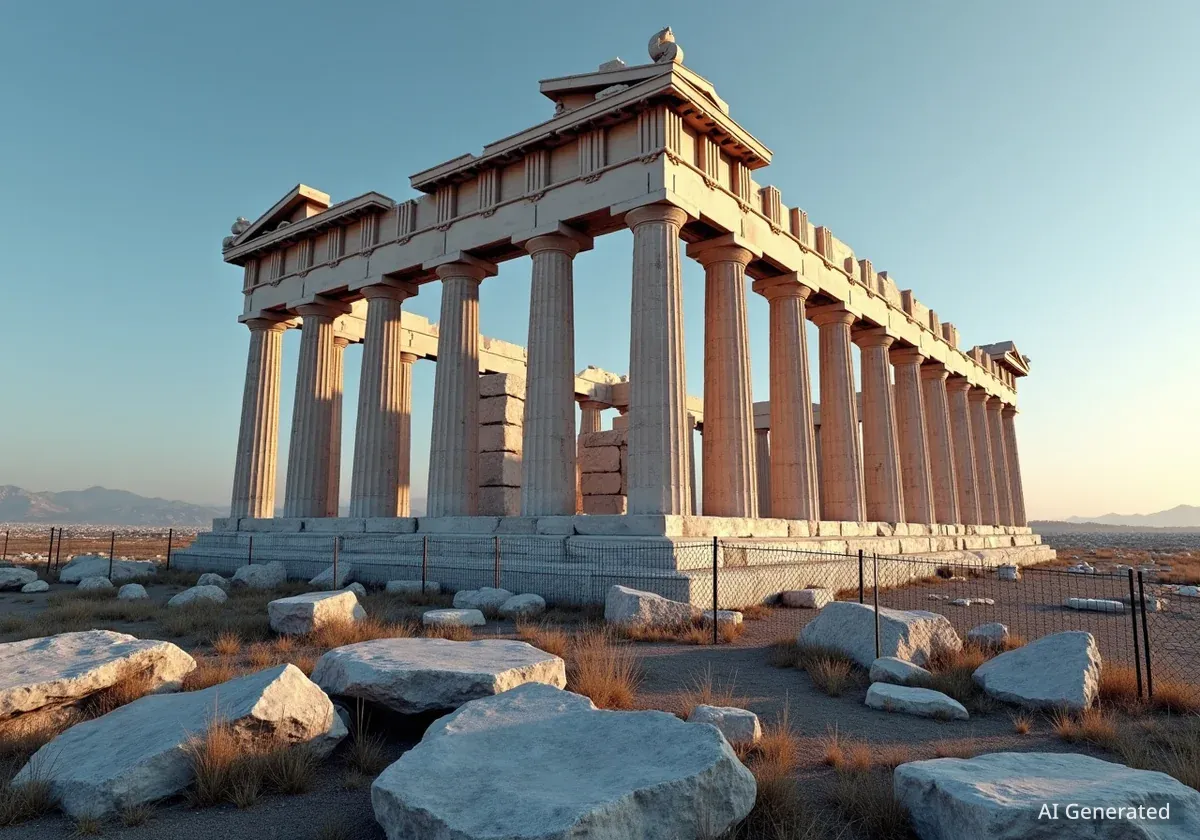
A permanent fence has been installed around the ancient Temple of Apollo, known as Portara, on the Greek island of Naxos. This action follows a notable incident in July where a tourist was seen removing an ancient stone from the historic monument. The Ministry of Culture confirmed the completion of the project, stating it was part of an original plan.
Key Takeaways
- Permanent fencing now surrounds Naxos's Temple of Apollo (Portara).
- The installation was prompted by a July incident involving a tourist.
- The Ministry of Culture asserts the project was pre-planned.
- Disputes between the Ministry and Naxos Municipality have emerged.
- Legal action by the Municipality regarding a temporary fence has been withdrawn.
Security Measures at Ancient Naxos Site
The decision to install a permanent fence aims to enhance the protection of the 6th-century BC temple. This measure comes after public outcry regarding the tourist incident. The Ministry of Culture stated that the Ephorate of Antiquities of the Cyclades carried out the work. This installation was part of a pre-existing plan for the site.
The Portara, a large marble gate, is a prominent landmark on Naxos. It is the only remaining part of an unfinished temple dedicated to Apollo. Thousands of tourists visit the site each year, especially at sunset, due to its scenic views.
Historical Significance of Portara
- The Portara is the monumental gate of an unfinished temple to Apollo.
- Construction began around 530 BC under the tyrant Lygdamis.
- It stands on Palatia islet, connected to Naxos by a causeway.
- The gate is made of four large marble pieces, each weighing several tons.
Dispute with Naxos Municipality
The Ministry of Culture's statement also addressed ongoing tensions with the Municipality of Naxos. The Ministry criticized municipal authorities for the recent arrest of members of the Ephorate of Antiquities. They described this incident as "inexcusable."
This arrest highlights a broader disagreement between the national cultural protection body and local government. The nature of the arrests and the specific charges were not detailed in the Ministry's statement. However, the strong language used suggests a serious breakdown in communication and cooperation.
"The incident involving the arrest of Ephorate of Antiquities members is inexcusable," a Ministry of Culture spokesperson stated, emphasizing the gravity of the situation.
Furthermore, the Ministry noted that the Municipality of Naxos has withdrawn its legal request. This request had sought the immediate removal of a temporary fence. This temporary barrier was also put in place around the 6th-century BC temple. The withdrawal of this legal action suggests a potential, albeit perhaps reluctant, acceptance of the increased security measures by local officials.
Background on Cultural Heritage Protection
Greece has strict laws protecting its archaeological sites and monuments. The Ephorate of Antiquities is a regional service of the Ministry of Culture. Its role is to protect, preserve, and promote ancient Greek heritage. Incidents of damage or theft at archaeological sites are taken very seriously by authorities.
Broader Implications for Site Preservation
The incident in July, where a visitor was photographed lifting an ancient stone, sparked significant debate. Many expressed concern over the vulnerability of Greece's cultural heritage. Social media posts of the incident quickly went viral, drawing international attention to the Portara site.
This event underscored the need for more robust security measures at popular archaeological locations. While the Portara is an open-air site, its accessibility also makes it susceptible to unintended or intentional damage. The Ministry's swift action to install a permanent fence demonstrates a commitment to safeguarding these irreplaceable historical assets.
Public Access and Preservation Balance
Balancing public access with the need for preservation is a constant challenge for heritage sites. Sites like the Portara offer unique experiences to visitors. However, this openness also carries risks. The new fencing aims to manage this balance more effectively, ensuring the monument's longevity.
- Increased Security: Physical barriers deter unauthorized interaction with ancient structures.
- Visitor Awareness: Fences also serve as a clear visual boundary, reminding visitors of the site's fragility.
- Long-term Protection: These measures are crucial for protecting monuments from erosion, vandalism, and accidental damage over time.
The Ministry of Culture continues to work on various projects across Greece to protect its vast archaeological wealth. According to official data, Greece has over 20,000 recognized archaeological sites and monuments. Protecting these sites requires continuous investment and vigilance.
The installation at Portara is an example of such efforts. It reflects a national strategy to safeguard cultural heritage against modern threats. This includes both human interaction and environmental factors.
Moving Forward with Heritage Protection
The completion of the fencing project at the Temple of Apollo marks a significant step. It reinforces security at one of Naxos's most iconic landmarks. Despite local objections, the Ministry of Culture has prioritized the monument's protection.
This situation also highlights the complex relationships between national cultural bodies and local administrations. Effective collaboration is often essential for the successful management of historical sites. The Ministry's public statement suggests a call for greater understanding and cooperation moving forward.
The Portara remains a powerful symbol of ancient Greek civilization. Its enhanced security ensures that future generations can continue to appreciate its historical and cultural value. Tourists visiting Naxos will now observe the monument with these new protective measures in place.