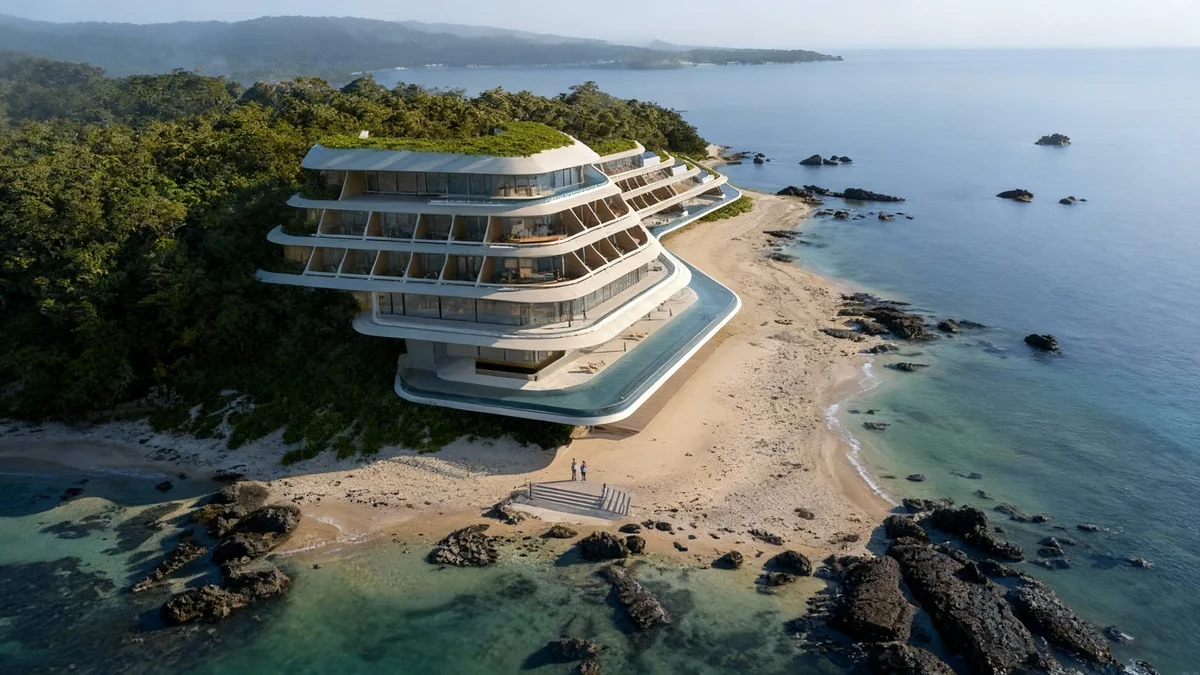
Zaha Hadid Architects has revealed its design for a new hotel on the coast of Okinawa, Japan. The project, commissioned by hospitality brand Not A Hotel, will feature a distinct, winding structure that mirrors the natural contours of the shoreline and surrounding landscape.
The Vertex Hotel is planned for a 25,300-square-metre site situated between a dense forest and the beach. The design incorporates villas, suites, and an outdoor pool, with a strong focus on environmental preservation in line with local guidelines.
Key Takeaways
- Zaha Hadid Architects has designed the Vertex Hotel for the Not A Hotel brand in Okinawa, Japan.
- The hotel's curving, serpentine shape is inspired by the site's limestone geology and shoreline.
- Construction will prioritize sustainability, using prefabricated components and locally sourced materials like pine and limestone.
- Key features include shaded outdoor terraces, natural ventilation, and an elevation of 6.5 meters to protect against coastal weather.
A Design Forged by Nature
The core concept behind the Vertex Hotel is its deep connection to the Okinawan landscape. The architectural form is not imposed upon the site but rather emerges from it. The design team conducted detailed studies of the oceanfront location, allowing the local geology to inform the building's shape.
The structure follows the contours of the shoreline, appearing as a continuation of the existing rock formations. It is articulated as a series of stepped horizontal terraces, gardens, and courtyards that mimic the area's natural topography. This approach aims to create a building that feels like a natural extension of the environment.
Renderings of the project show soft-edged floor plates that extend from a largely glass facade. This transparency ensures that guests have uninterrupted views of the ocean, fostering a constant connection to the surrounding sea and sky.
Sustainable Construction and Local Materials
A significant aspect of the project is its commitment to minimizing environmental impact during construction. The hotel will utilize a modular structure composed of prefabricated components. This method is intended to reduce on-site activity and disturbance to the local ecosystem.
The material palette was carefully chosen to embed the hotel into its surroundings. The plan calls for the use of locally-sourced pine and limestone, materials that are integral to the region's traditional architecture. This not only supports the local economy but also ensures the building's aesthetic is in harmony with its environment.
Project at a Glance
- Total Area: 25,300 square metres
- Location: Coastal site in Okinawa, Japan
- Key Materials: Locally-sourced pine, limestone, prefabricated concrete
- Elevation: All facilities are at least 6.5 metres above the high-water line
Additionally, prefabricated concrete elements will be used, finished with a tone and texture designed to evoke the white sands of Okinawa's famous beaches. Zaha Hadid Architects noted that the hotel aims to extend the rich tradition of Okinawan craftsmanship, showcasing the skill of local builders and artisans.
Enhancing the Guest Experience with Thoughtful Design
The hotel's design is not just about aesthetics; it is also focused on creating a comfortable and unique experience for its guests. Winding around the facade are curved canopies that overlook the ocean. These structures provide shaded outdoor spaces, a nod to the deep eaves found in the island's vernacular architecture.
The specific shape of each canopy is not arbitrary. Their forms were determined by a detailed analysis of the site's daily solar irradiation, ensuring optimal shade throughout the day. This creates comfortable outdoor areas for relaxation while reducing the need for artificial cooling.
"The stepped canopies of the hotel gently transition from the unique geology of the shoreline to the dense vegetation of the rainforest, giving uninterrupted views of the ocean and a deep connection to the surrounding environment," said project director Ludovico Lombardi.
A slim outdoor pool wraps around the ground level, following the building's curving form and further integrating the structure with the coastal setting. Natural ventilation is also a priority throughout the hotel's communal areas and private villas, reducing energy consumption and allowing guests to enjoy the fresh sea breeze.
Building for Resilience and Preservation
The design team also accounted for the challenges of a coastal location. To mitigate the risks associated with harsh weather and high tides, all hotel facilities will be elevated at least 6.5 metres above the high-water line. This practical measure ensures the long-term safety and durability of the structure.
About Zaha Hadid Architects
Founded by the late Zaha Hadid, the UK-based firm is renowned for its futuristic and dynamic designs that push the boundaries of architecture. The firm's recent work includes a new hospital in Italy arranged around multi-level gardens and a waterfront stadium and sports centre in Guangzhou, China, showcasing its diverse portfolio in large-scale public and private projects.
The entire project is being developed to "preserve the island's unique coastal and marine ecosystems," according to the architecture firm. This commitment reflects a growing trend in hospitality development, where luxury and environmental responsibility are seen as interconnected. The Vertex Hotel aims to offer a premium experience while respecting and celebrating its pristine natural location on the Okinawan coast.