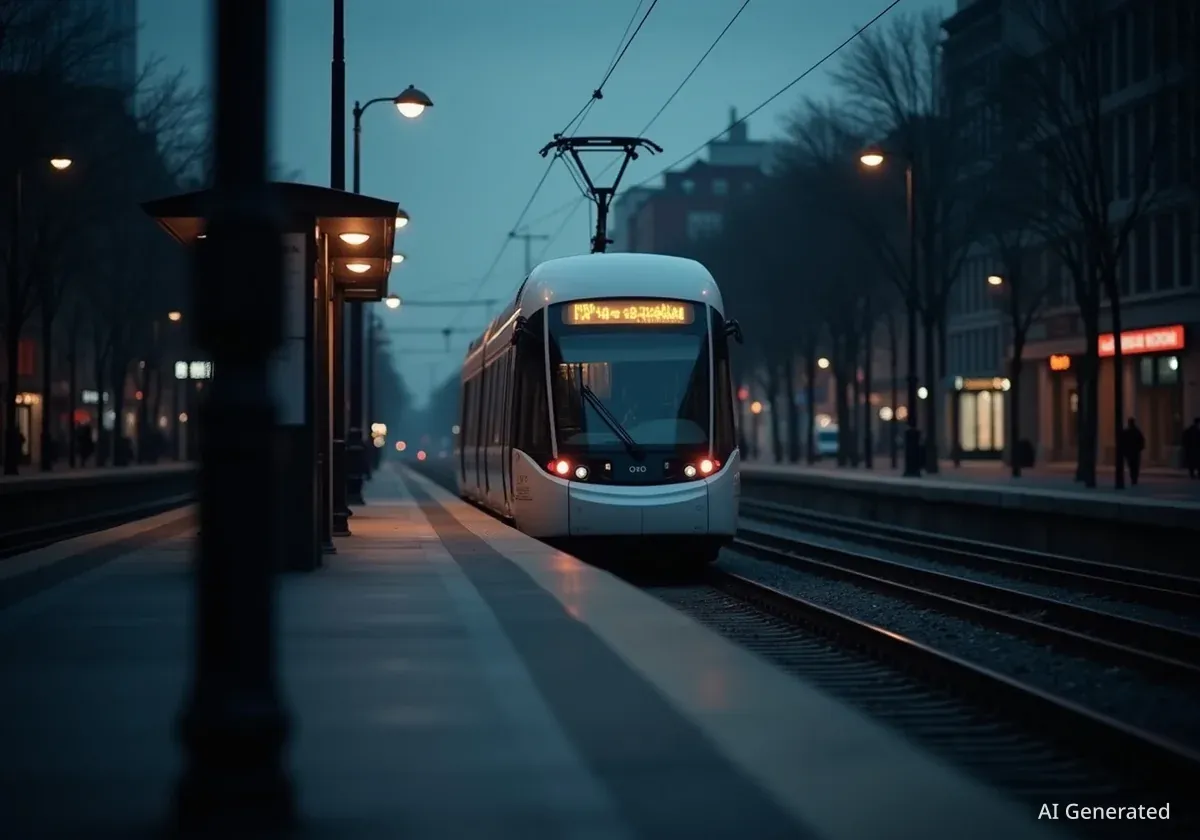
The District of Columbia's streetcar service will cease operations significantly sooner than initially planned. Original projections set the closure for summer 2027. However, due to budget cuts, the service is now expected to conclude in March, more than a year ahead of schedule. This early shutdown leaves the future of public transportation along the H Street and Benning Road corridors in Northeast D.C. uncertain.
Key Takeaways
- DC Streetcar service will end in March, not summer 2027.
- Budget cuts led to the early termination of the streetcar's annual funding.
- An electric bus system is planned to replace the streetcar, but without a firm timeline.
- The decision mirrors the earlier shutdown of the D.C. Circulator bus service.
- Concerns exist regarding the impact on workers and future transit options.
Streetcar Closure Fast-Tracked by Budget Decisions
Mayor Muriel E. Bowser had previously announced plans to replace the city's lone streetcar line with an electric bus service. This new system, which she referred to as a "next generation streetcar," would use the existing overhead wires for charging. The projected timeline for this replacement was late 2028 or mid-2029.
However, during a tight budget season, D.C. Council Chairman Phil Mendelson eliminated the streetcar's annual funding. This funding cut takes effect in October. A spokesperson for the District Department of Transportation (DDOT) confirmed that contractual penalties for canceling the operator's agreement necessitate an earlier end to service, specifically in March. The streetcar service costs approximately $10 million annually to operate.
Fact Check
- Annual Cost: The D.C. Streetcar service costs about $10 million per year.
- Original End Date: Summer 2027.
- New End Date: March.
- Daily Ridership (Pre-Pandemic): Approximately 3,300.
- Daily Ridership (Current): Approximately 2,600.
A History of Delayed Plans and Low Ridership
The accelerated closure of the streetcar service echoes the fate of another D.C. transit initiative, the D.C. Circulator bus service, which concluded its operations on December 31. Both systems were conceived in the early 2000s. At that time, D.C. leaders aimed to boost tourism and development by providing transportation to areas not served by the Metro system.
Streetcars gained popularity in many U.S. cities, viewed as a more substantial public transit option than simply adding new bus routes, yet less complex and expensive than constructing new rail lines.
Historical Context
The D.C. Streetcar and D.C. Circulator were both envisioned in the early 2000s to support urban growth and tourism. While the Circulator expanded its network, the streetcar remained a single, limited line. This limited expansion and operational challenges contributed to its eventual closure.
Despite their early promise, both the Circulator and the streetcar took nearly a decade to launch. Once operational, the Circulator expanded rapidly, but the streetcar remained a single route along H Street and Benning Road in Northeast D.C. Proposals to extend the line east across the Anacostia River and west to Georgetown never materialized. When Phil Mendelson became council chairman in 2014, he reduced proposed funding for a larger streetcar network.
"There is a value in getting H Street underway and seeing how well it works," Mendelson stated at the time, referring to the initial streetcar route.
Operational Challenges and Declining Numbers
The single streetcar route frequently faced operational challenges. Without a dedicated, blocked-off track, streetcars often encountered delays due to double-parked cars. Ridership on the streetcar, which is free to use, has consistently been lower than on the crosstown bus routes covering similar areas.
Before the pandemic, the streetcar averaged about 3,300 daily riders. This number has since dropped to approximately 2,600 daily riders. For comparison, this is roughly one-third of the ridership observed on WMATA's D20 bus route, formerly known as the X2, which serves much of the same territory.
Political Disagreements and Economic Impact
Mayor Bowser, upon taking office in 2015, pledged to complete the east-west streetcar line. She and Chairman Mendelson have previously disagreed over the service. Mendelson once described it as "horribly botched" and "wildly unpopular."
On Wednesday, Mendelson released a statement acknowledging the streetcar's role. "The streetcar was a defining characteristic of the H Street corridor," he said. He also expressed disappointment with the administration's stance. "I am very disappointed in what I consider the disingenuousness of the administration that the streetcar is 'oh so important,' until it no longer is to them."
Development along the H Street corridor did experience significant growth in the years before the streetcar service began. Officials argued that the promise of the streetcar helped to spur this development. However, in recent years, businesses on H Street have faced difficulties due to an increase in crime and a decrease in dining out.
Cities, including the District, with limited budgets are now prioritizing the improvement and expansion of bus services. A project to add bus-only lanes to the H Street corridor, which was planned for this year, is currently on hold.
Focus Shifts to Future Transit Solutions
Councilmember Charles Allen (D-Ward 6), who chairs the council's transportation committee, voiced his opposition to the funding cut. He stated that he had "planned around a two-year wind down." However, Allen emphasized his focus on "what comes next." He has allocated $250,000 for a study examining transit options in the area. Additionally, Metro plans to invest approximately $2 million to explore proposals for improved access to the RFK campus.
- Councilmember Allen's Budget: $250,000 for transit option study.
- Metro's Budget: $2 million for RFK access proposals.
The impending closure has also raised concerns among workers. As with the D.C. Circulator shutdown, the transit union representing streetcar employees states that workers have been left without clear guidance regarding their future. The union, which represents about 50 streetcar drivers, learned of the closure last week.
"Let's learn from what happened at Circulator and not screw over the workers again," said Matthew Girardi of ATU Local 698.
Funds from the sale of Circulator buses were intended for a fund for the laid-off workforce but were never disbursed, highlighting a precedent of worker concerns during transit service changes.