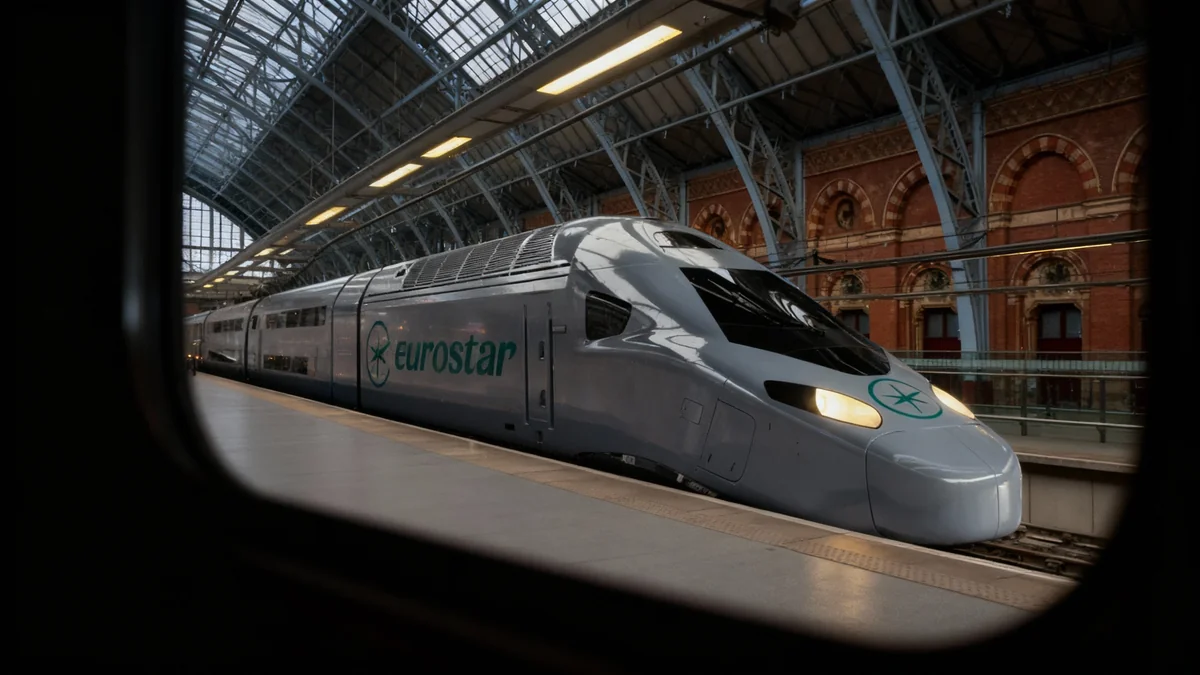
Eurostar has announced a significant expansion of its fleet, confirming plans to introduce double-decker trains through the Channel Tunnel for the first time. This move involves a substantial order for new trains and a major investment in its London depot, aiming to boost passenger numbers significantly over the coming years.
Key Takeaways
- Eurostar ordered up to 50 new 'Celestia' double-decker trains from Alstom.
- The first six double-decker trains are expected to enter service in 2031.
- This expansion could increase Eurostar's London service capacity by 30%.
- Eurostar plans to invest €80 million in its Temple Mills depot in London.
- The introduction of double-decker trains marks a first for the Channel Tunnel.
Eurostar Orders New 'Celestia' Double-Decker Fleet
The cross-Channel rail operator has finalized a deal with manufacturer Alstom for 30 'Celestia' trains, with an option to purchase 20 more. This order, valued at approximately €2 billion (£1.74 billion), represents a major step in Eurostar's strategy to increase its operational capacity.
Each new train will measure 200 meters in length. When two are coupled, as is common practice for current services, the resulting 400-meter train would offer approximately 1,080 seats. This design allows for a significant increase in passenger capacity per service.
Eurostar's chief executive, Gwendoline Cazenave, expressed pride in the upcoming changes, stating, "I am particularly proud to bring double-decker trains to the UK for the very first time." She emphasized that these trains would provide "exceptional comfort" for passengers.
Expanding Capacity and Passenger Targets
Last year, Eurostar transported 19.5 million passengers. Ms. Cazenave outlined an ambitious goal to increase this figure to 30 million passengers. The new fleet, which will include replacements for some older trains, is projected to lead to a 30% increase in train services to London.
Did You Know?
The only other double-decker train to ever operate on Britain's railways was an experimental service that began in 1949, making the 'Celestia' a historic return of this train type to the UK.
This expansion follows Eurostar's announcement in June regarding new routes. These plans include launching services from London to cities like Geneva and Frankfurt, further broadening its network across Europe.
Significant Investment in London Depot
To support the new, larger trains, Eurostar has committed to investing €80 million in developing the Temple Mills depot in London. This facility is crucial as it is currently the only depot in the UK equipped to accommodate the larger high-speed trains used on continental European networks.
Depot Ownership and Use
The Temple Mills depot is owned by the government's London St Pancras Highspeed organization. Currently, Eurostar holds exclusive usage rights for this facility, a point of contention for potential new operators.
The depot's capacity and access are central to the future of cross-Channel rail services. It must be able to handle the increased number of trains and potentially services from other operators.
Competition for Channel Tunnel Routes
While Eurostar is currently the sole provider of cross-Channel rail services between London and Paris, other companies are seeking to enter the market. These include Spanish start-up Evolyn, Sir Richard Branson’s Virgin, and a partnership between Gemini Trains and Uber.
The Office of Rail and Road, a regulatory body, is currently reviewing proposals from these firms regarding their use of the Temple Mills depot. They are also assessing Eurostar's plans for increasing its own services. A decision on depot access is expected within weeks.
Challenges for Double-Decker Trains in the UK
Despite Eurostar's plans, the widespread adoption of double-decker trains across the broader British rail network remains unlikely. Music producer and train enthusiast Pete Waterman shared his perspective on the BBC's Today programme, highlighting the historical constraints of UK railway infrastructure.
Waterman explained, "Because Britain's railways were built 200 years ago, not just after the Second World War, most of the routes would not be able to cater for such large trains due to obstructions such as tunnels and overhead lines." He added that the costs to adapt the network would be "absolutely astronomical."
This means that while Eurostar can operate its new double-decker trains into St Pancras International, the unique design and construction of the Channel Tunnel and specific high-speed lines allow for this. The broader national network, however, presents significant challenges for similar expansion.
The introduction of double-decker trains marks a significant investment in the future of international rail travel from the UK. It promises increased capacity and comfort for passengers, but also highlights ongoing infrastructure challenges and competitive pressures within the cross-Channel market.