New York City officials have suspended a major transportation project on 34th Street in Manhattan following a directive from the federal government. The Trump administration, through the Federal Highway Administration, ordered a halt to the project, threatening to withhold federal funding and approvals for other city transit initiatives.
Key Takeaways
- The Federal Highway Administration has ordered New York City to stop work on dedicated bus lanes along 34th Street.
- The project was designed to improve commute times for approximately 28,000 daily bus riders.
- Federal officials cited concerns about the project's impact on truck drivers and emergency vehicle access.
- The city had projected that the new lanes would speed up bus service by as much as 15 percent.
Federal Directive Pauses Major Transit Upgrade
A plan to improve public transit in one of Manhattan's busiest corridors has been abruptly stopped. In a letter issued Friday, the Federal Highway Administration (FHWA) instructed New York City to cease all work on the 34th Street bus lane project. This move comes after the Trump administration raised objections to the plan.
The federal government's primary concerns, as stated in the letter, revolve around the potential consequences for other road users. Specifically, officials questioned how the new dedicated bus lanes would affect the movement of commercial trucks and the response times of emergency vehicles along the critical crosstown street.
This federal intervention places the city in a difficult position, as the letter also hinted that future funding and approvals for other, unspecified transit plans could be jeopardized if the city proceeded with the 34th Street project.
Project by the Numbers
- Affected Riders: 28,000 daily
- Projected Speed Increase: Up to 15%
- Project Length: Over one mile
- Location: 34th Street between Third and Ninth Avenues
Impact on Thousands of Daily Commuters
The now-paused project was a key initiative by the New York City Department of Transportation (DOT) to address slow bus speeds. Announced in May, the plan was celebrated as a significant step toward improving the daily commutes of thousands of New Yorkers.
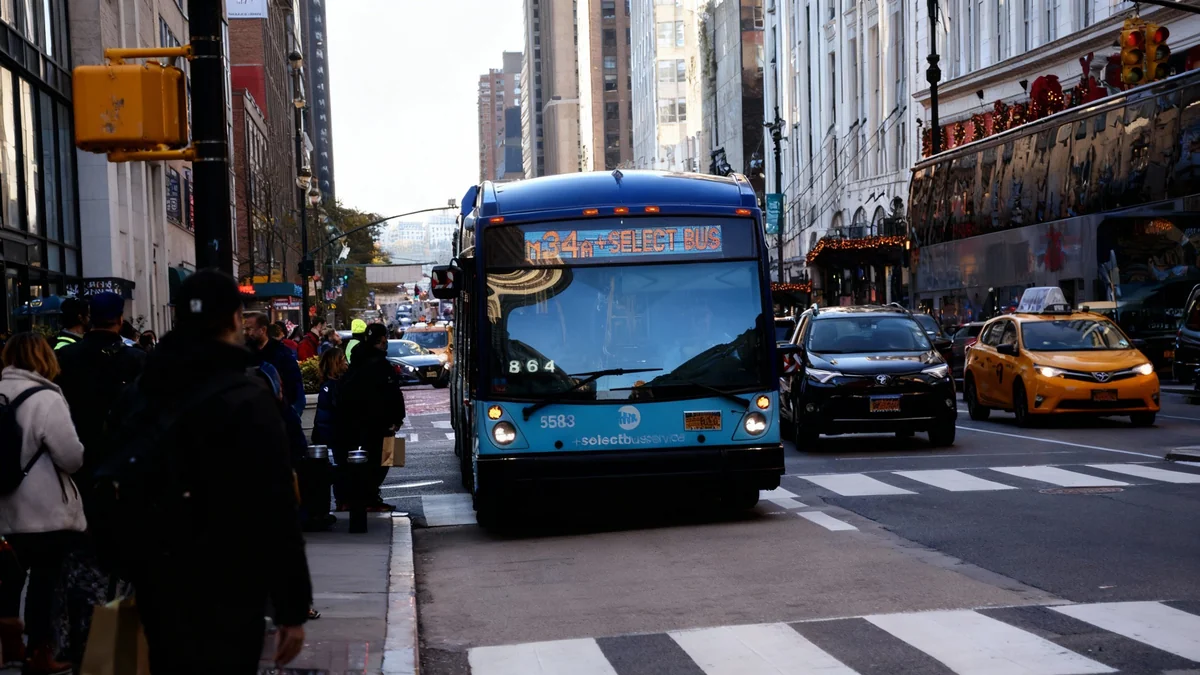
Approximately 28,000 people rely on bus routes along the 34th Street corridor every day. City officials had calculated that creating dedicated lanes for buses would lead to a substantial improvement in service, estimating a reduction in travel times of up to 15 percent. This would translate to faster, more reliable journeys for a large volume of passengers.
With the project now on hold, these anticipated benefits are uncertain. Commuters who use the affected bus routes will continue to face the existing traffic congestion that the project was specifically designed to alleviate.
Details of the 34th Street Busway Plan
A Vital Crosstown Artery
The project was set to transform a significant portion of 34th Street, a major artery that connects the east and west sides of Manhattan. The planned bus lanes would have stretched for over a mile, running between Third Avenue and Ninth Avenue.
This section of 34th Street is known for heavy traffic, serving as a primary route for shoppers, tourists, and office workers. It connects major hubs like Penn Station and the Herald Square shopping district. The goal of the DOT was to prioritize public transportation in this congested area, making bus travel a more efficient option.
Background on Bus Improvement Projects
Dedicated bus lanes, often called "busways," are a common urban planning tool used globally to improve public transit efficiency. By separating buses from general traffic, cities can reduce delays caused by congestion, leading to more reliable schedules and faster travel times. New York City has implemented similar successful projects on other major streets, such as 14th Street.
A Pattern of Federal and City Disagreements
The order to halt the 34th Street project is not an isolated event. It represents another point of friction between New York City's transit goals and the priorities of the Trump administration. The federal government's willingness to use funding as leverage has become a recurring theme in discussions about major infrastructure projects in the region.
The administration's letter explicitly links the continuation of work on 34th Street to the approval of other transit plans, creating a significant challenge for city planners who rely on federal partnerships.
Transit advocates have expressed disappointment, viewing the federal action as a setback for public transportation improvements. They argue that such projects are essential for a city where a majority of residents rely on buses and subways for daily travel. The future of the 34th Street bus lanes, and potentially other transit upgrades, now depends on resolving this conflict between city and federal authorities.
For now, the thousands of commuters who were anticipating a faster ride across Midtown Manhattan will have to wait as city officials navigate the federal government's directive and its broader implications for transportation in New York City.