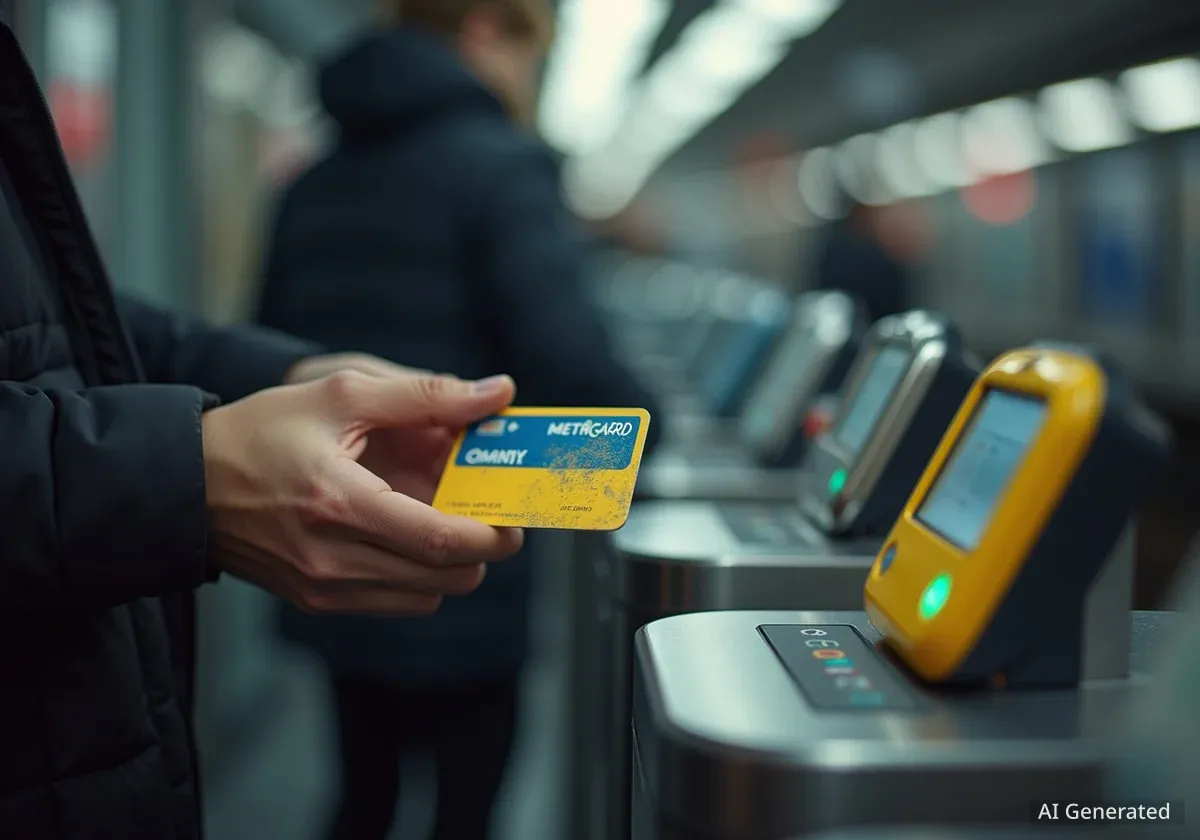
New York City's iconic MetroCard, a staple for millions of commuters and tourists for nearly three decades, will no longer be sold starting January 1. This change marks the official transition to OMNY, the Metropolitan Transit Authority's (MTA) new contactless fare payment system. Existing MetroCards will still be accepted for a period, but the blue and yellow plastic cards are slowly fading from the city's transit landscape.
Key Takeaways
- MetroCard sales end January 1, 2024.
- OMNY becomes the primary fare payment method.
- Existing MetroCards will remain valid for an undisclosed period.
- MetroCards introduced free transfers and flexible fare options.
- The cards became a cultural icon, inspiring collectors and artists.
The End of an Era: From Swipe to Tap
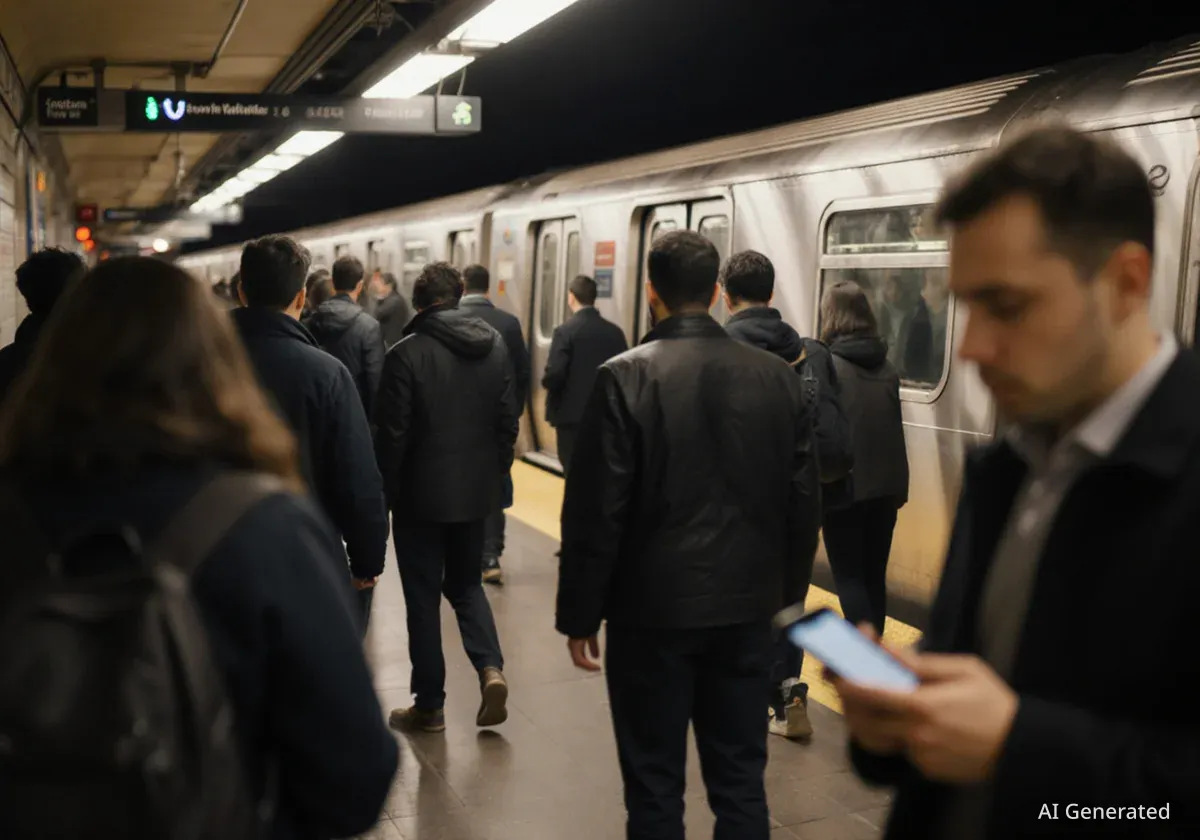
For many New Yorkers, the MetroCard represents a significant part of their daily routine. The experience of swiping too fast or too slow, or facing the dreaded turnstile thud, is a shared memory. Mike Glenwick, 37, a lifelong city resident and MetroCard collector, described it as "embarrassing" when a swipe failed. He added that it made him feel "like you’re not an authentic New Yorker if you’re not swiping your MetroCard the right way."
The MTA initially launched the MetroCard in 1994. The agency even released advertisements to teach residents how to use the new system. Now, nearly 30 years later, the city moves forward with OMNY, or One Metro New York.
MetroCard Milestones
- 1994: MetroCard introduced, replacing subway tokens.
- 1997: Free transfers between buses and subways became available.
- ~400: Number of limited-edition MetroCards issued over the years.
- $20 Million: Estimated annual savings for MTA from OMNY transition.
A Look Back at MetroCard's Journey
Before the MetroCard, New Yorkers used subway tokens, first introduced in 1953. These small, dime-sized metal pieces, often featuring a hollowed-out 'Y' between an 'N' and 'C' for NYC, were simple to use. They also allowed the MTA to increase fares without changing the entire collection system. However, by 1983, then-MTA Commissioner Richard Ravitch envisioned a more modern payment method: a magnetic stripe card with stored value.
"His argument was that New York is a very modern cosmopolitan city and there are other modern cosmopolitan cities that are using this as their fare payment system," said Jodi Shapiro, curator of the FAREwell MetroCard exhibit at the New York Transit Museum.
The shift to MetroCards aimed to modernize the transit system and potentially reduce fare evasion. Noah McClain, a sociology professor who has studied MetroCard technology, noted that while fare evasion persisted in different forms, the card brought other benefits to riders. These benefits included more flexible fare options, such as discounts for seniors, disabled individuals, and students. A major improvement was the introduction of free transfers between buses and subway trains, a perk not available with tokens.
MetroCard as a Cultural Icon
Much like the subway tokens before them, MetroCards quickly became a part of New York City's identity. This was partly by design, according to Jodi Shapiro, who stated that "MetroCards were made to be collected." The MTA issued its first limited-edition card in 1994, the same year the system launched. Since then, approximately 400 commemorative MetroCards have been released. These cards often featured advertisements, generating revenue for the MTA, or marked significant city events.
Notable Commemorative MetroCards
- New York Rangers Stanley Cup win (1994)
- First Yankees and Mets "Subway Series" game (1997)
- Grand Central's centennial anniversary
- David Bowie exhibit collaboration with Spotify and Brooklyn Museum
- Notorious B.I.G.'s 50th Birthday
- Supreme-branded cards
These limited-edition cards often drew long lines of collectors. Mike Glenwick, who started his collection at age six, owns nearly 100 MetroCards, including his first, which featured the New York Rangers. "It was something that was accessible to collect. I didn’t spend extra money because we used the MetroCards anyway," Glenwick explained.
MetroCards as Art
Beyond collecting, MetroCards also became an artistic medium. Thomas McKean, a New York City artist, began creating sculptures and mosaics from discarded MetroCards after realizing their aesthetic potential. He started by cutting and piecing together cards in two-dimensional designs, then moved to three-dimensional works. McKean's art has been featured in a Manhattan home goods store and on the cover of Time Out New York magazine. He maintains a reserve of several thousand untouched MetroCards for his projects, ensuring no scrap goes to waste.
The Future: OMNY's Tap-and-Go System
The OMNY system allows riders to pay fares by tapping their smartphones or smartwatches with mobile wallets, credit cards, or OMNY cards at turnstiles. Currently, OMNY cards can be purchased for $1 at subway vending machines and retailers across the city. Shanifah Rieara, MTA chief customer officer, highlighted the benefits of OMNY in a statement from March. She noted that it has been "a game changer for everyday riders and visitors, saving them the guessing game on what fare package is most cost efficient for their travels and making using NYC’s transit system much easier."
The MTA expects the transition to OMNY to save the agency approximately $20 million annually. These savings come from reduced costs related to MetroCard production and distribution, vending machine repairs, and cash handling. OMNY also offers an unlimited rides feature after the 12th ride in a week, a benefit designed to compete with the previous unlimited MetroCard options.
Despite the modernization and cost savings, some riders express a sense of nostalgia. Mike Glenwick, the collector, admitted he is not ready for the full transition. "I feel like part of my childhood is disappearing… I don’t want to let it go until I have to," he said.