
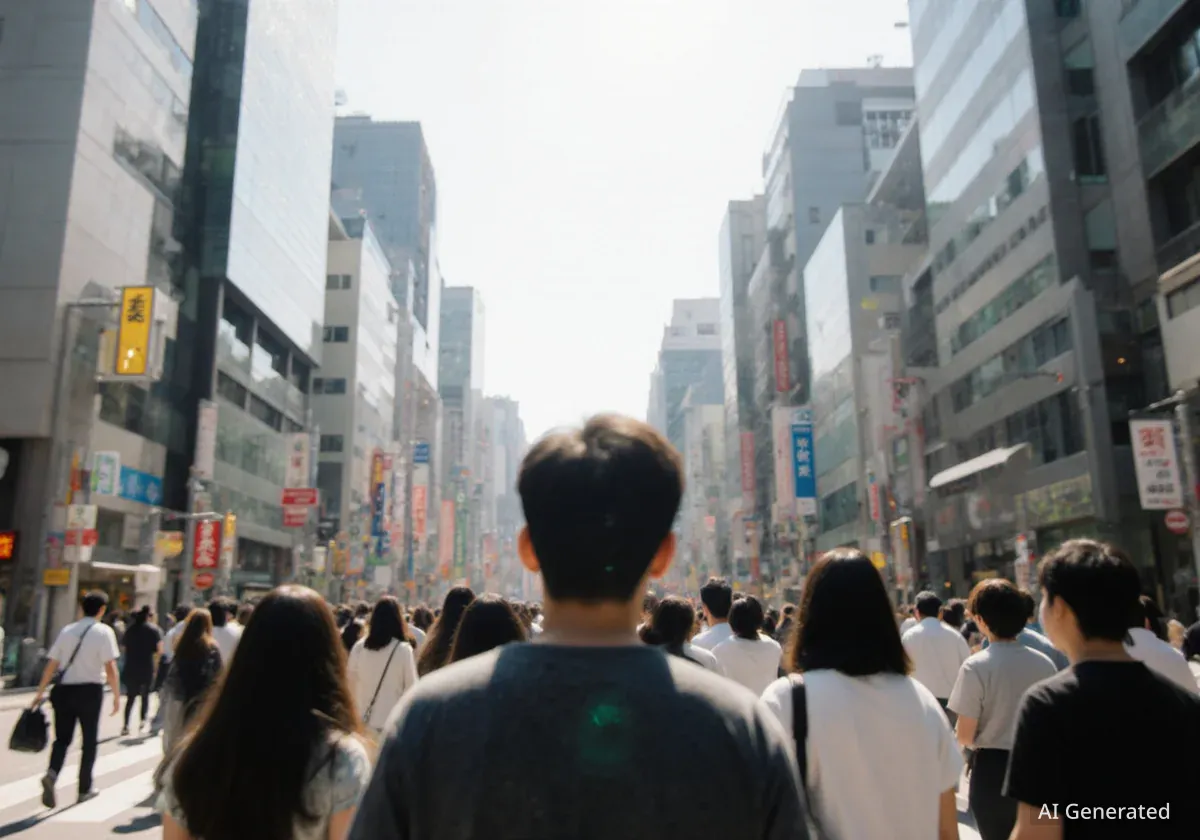
Japan welcomed a record 42.7 million foreign visitors last year, marking the first time the country has surpassed the 40-million threshold. This achievement brings Japan closer to its ambitious goal of 60 million visitors by 2030, following a steady recovery since the lifting of COVID-19 travel restrictions.
Key Takeaways
- Japan recorded 42.7 million foreign visitors last year, a new high.
- Tourist spending reached a record ¥9.5 trillion in 2025.
- Chinese visitor numbers saw a significant year-on-year increase despite recent diplomatic tensions.
- Overtourism concerns are prompting efforts to diversify visitor destinations.
- A weaker yen and global interest in Japanese culture contribute to the appeal.
Record-Breaking Influx and Economic Impact
The latest figures show a significant rebound in Japan's tourism sector. Last year's 42.7 million foreign visitors represent a substantial increase, building on the 36.87 million recorded in 2024. This marks two consecutive years of record-high visitor numbers.
This surge in tourism has provided a considerable boost to the Japanese economy. Foreign travelers spent a record ¥9.5 trillion in 2025, an increase from ¥8.1 trillion the previous year. This spending highlights the vital role tourism plays in the nation's economic health.
Fact Check
- Total foreign visitors last year: 42.7 million
- Tourist spending in 2025: ¥9.5 trillion
- Government goal for 2030: 60 million visitors
Shifting Visitor Demographics and Market Dynamics
Historically, Chinese visitors have formed the largest inbound market for Japan. While there was a 45% plunge in Chinese visitors in December due to diplomatic tensions, the overall number of Chinese tourists in 2025 increased by approximately 30% year-on-year. However, ongoing diplomatic issues may impact Chinese tourist numbers during future holiday periods, such as the Chinese New Year.
Despite these fluctuations, demand from other regions remains strong. According to the Ministry of Land, Infrastructure, Transport and Tourism, foreign visitors from Europe, the U.S., and Australia collectively rose by 22% year-on-year. Asia continues to be the largest source of inbound travelers, based on data from the Japan National Tourism Organization.
"The resilience of global interest in Japan, despite regional challenges, underscores the country's enduring appeal as a premier travel destination," stated a tourism official.
Addressing Overtourism and Promoting Regional Travel
The rapid increase in tourism has not been without challenges. Cities like Kyoto have experienced significant overtourism, leading to concerns about heavy traffic, long waiting lines, and the impact on local residents' daily lives. Some visitors' behaviors and cultural misunderstandings have also created friction within society.
In response, Japanese officials are actively working to manage tourist flows. Strategies include promoting less-visited regions and encouraging travelers to explore areas beyond the traditional tourist hotspots. This initiative aims to redistribute tourism benefits and support local economies that have not yet fully benefited from the boom.
Background
Japan has actively sought to boost its tourism sector for several years. The government's 'Visit Japan' campaign and strategic investments in infrastructure have contributed to making the country more accessible and attractive to international travelers. The recent weakening of the yen has also made travel to Japan more affordable for many.
The Allure of Japanese Culture and Future Outlook
Beyond affordability, Japanese culture and cuisine continue to attract global attention. The recent 'matcha frenzy,' for example, led to a global shortage and drew many foreign tourists to 'Instagrammable' matcha cafes across Japan. This cultural appeal, coupled with the favorable exchange rate, has cemented Japan's status as a highly desirable destination.
While the tourism surge is a positive economic driver, it also presents challenges for Japan's service industries. The World Travel & Tourism Council projects a 29% shortfall in workers by 2035, indicating a need for strategic labor planning to sustain the industry's growth.
Japan's journey towards its 2030 tourism goal appears robust, driven by diverse international interest and strategic government initiatives. The focus now shifts to sustainable growth and ensuring a positive experience for both visitors and local communities.