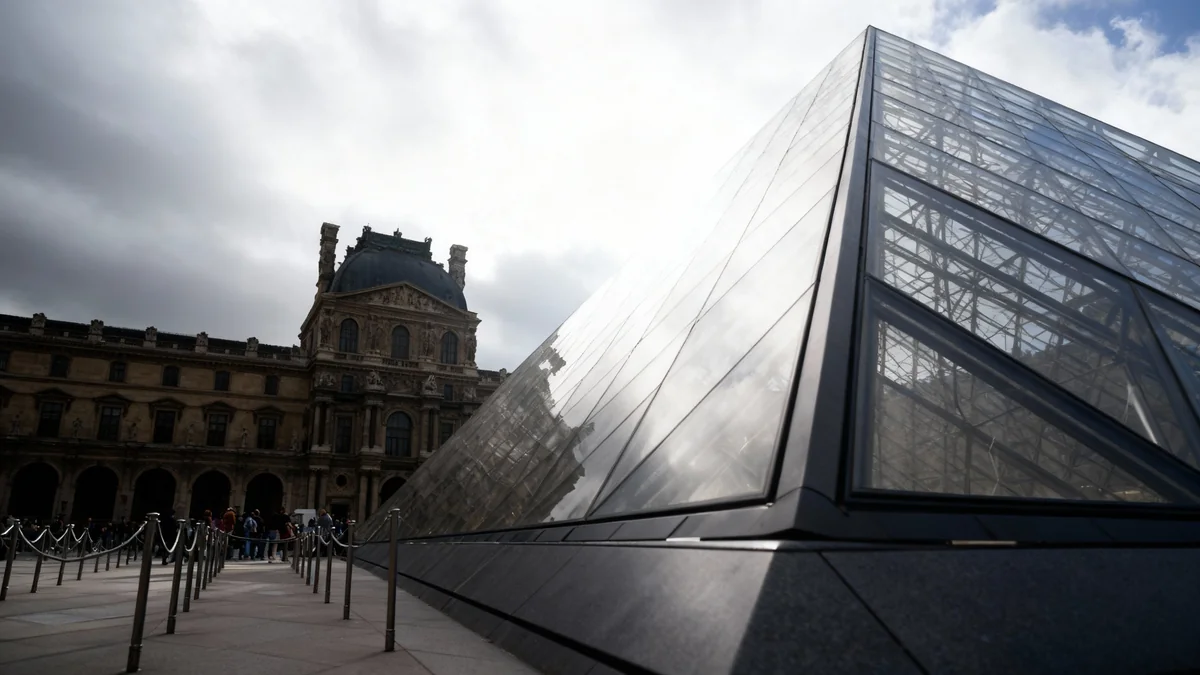
The Louvre Museum in Paris is grappling with significant infrastructure issues. A recent water leak in its Egyptian antiquities department damaged hundreds of documents, bringing attention to the museum's aging facilities. This incident follows a high-profile theft, further highlighting the need for upgrades.
Key Takeaways
- A water pipe leak damaged up to 400 documents in the Louvre's Egyptian antiquities library.
- No artworks were affected by the water damage.
- The incident underscores the need for infrastructure repairs and modernization at the museum.
- Security system upgrades are also a pressing concern after a recent jewelry theft.
Water Leak Affects Egyptian Antiquities Library
On Sunday afternoon, a water pipe burst in one of the three library rooms within the Louvre's Egyptian antiquities department. Francis Steinbock, the museum's deputy administrator, confirmed the incident in a recent television interview. The leak led to damage of a substantial number of documents.
Mr. Steinbock reported that up to 400 documents were affected by the water. These documents are part of the library's collection, crucial for research and historical records. Fortunately, the museum confirmed that no works of art were damaged in the incident.
Quick Fact
The Louvre Museum is the world's largest art museum and a historic monument in Paris, France. It houses approximately 38,000 objects from prehistory to the 21st century.
Aging Infrastructure Under Scrutiny
This recent leak has brought renewed focus on the condition of the Louvre's infrastructure. The incident suggests that the museum's facilities require significant repairs and modernization. Maintaining such a vast and historic institution presents ongoing challenges.
The Louvre is housed in the Louvre Palace, originally a medieval fortress. Over centuries, it has undergone numerous expansions and renovations. However, sections of the building's internal systems, including plumbing, are showing signs of age.
"Documents had been damaged in a leak from a water pipe in the library of the Egyptian antiquities department," said Francis Steinbock, deputy administrator of the Louvre.
The Need for Comprehensive Upgrades
Experts agree that a comprehensive plan for infrastructure upgrades is vital for the preservation of the museum's collections and the safety of its visitors. This includes not only plumbing systems but also electrical, climate control, and structural elements.
Investment in modern infrastructure can prevent future incidents like the recent leak. It can also help ensure optimal conditions for the conservation of delicate artifacts and historical documents.
Security Concerns Amid Recent Theft
The infrastructure issues emerge while the Louvre is still addressing concerns about its security systems. Just two months prior, the museum faced a significant challenge when four thieves stole royal jewelry. The heist, valued at over $100 million, took less than 10 minutes to execute.
This high-profile theft prompted a review of the museum's security protocols and systems. The incident highlighted that outdated security measures could leave valuable collections vulnerable. The museum needs to address both physical security and internal infrastructure simultaneously.
Background Information
The Louvre is one of France's most visited cultural sites. Its extensive collections attract millions of visitors annually, making its proper maintenance and security paramount to national heritage and international tourism.
Balancing Preservation and Modernization
The Louvre faces the complex task of balancing the preservation of its historic architecture with the demands of modern infrastructure and security. Any renovation work must be carried out with extreme care to avoid disturbing the existing structure or its priceless contents.
The challenges are significant, requiring careful planning and substantial financial resources. The museum's administration is under pressure to implement effective solutions quickly. Ensuring the long-term safety and integrity of the Louvre's collections remains a top priority.
Future Steps for the Louvre
The museum's administration will likely prioritize a thorough assessment of all its internal systems. This includes plumbing, electrical, and climate control infrastructure across its vast complex. Such assessments are crucial for identifying areas most in need of repair or replacement.
Funding for these extensive projects will be a key factor. As a public institution, the Louvre relies on government support, donations, and its own revenue streams. Securing adequate funding will be essential to undertake the necessary upgrades.
- Immediate Response: Repair the damaged pipe and assess the full extent of document damage.
- Comprehensive Review: Conduct a detailed audit of all aging infrastructure components.
- Security Enhancements: Implement advanced security technologies and protocols.
- Long-Term Planning: Develop a multi-year plan for sustained modernization and maintenance.
The Louvre continues to operate while addressing these critical issues. Visitors can still explore its vast collections, but the recent events underscore the ongoing work required to maintain such an iconic global landmark.