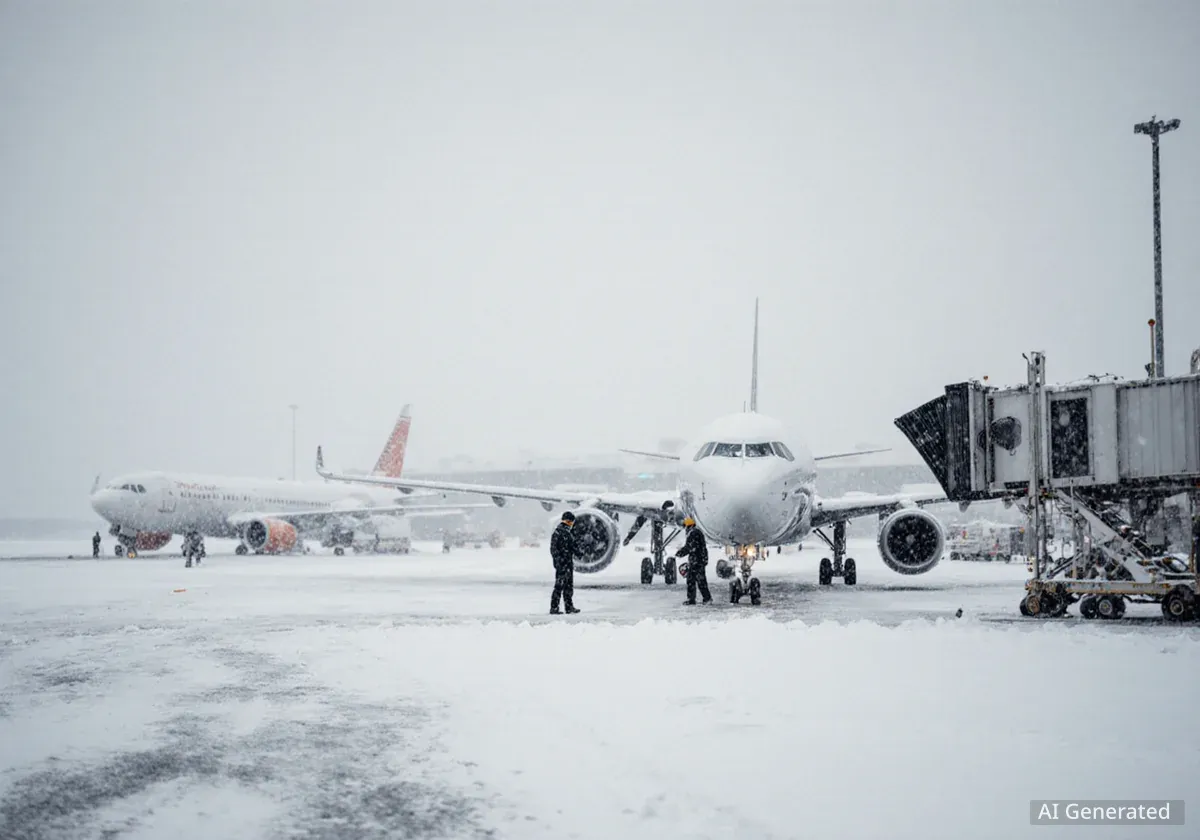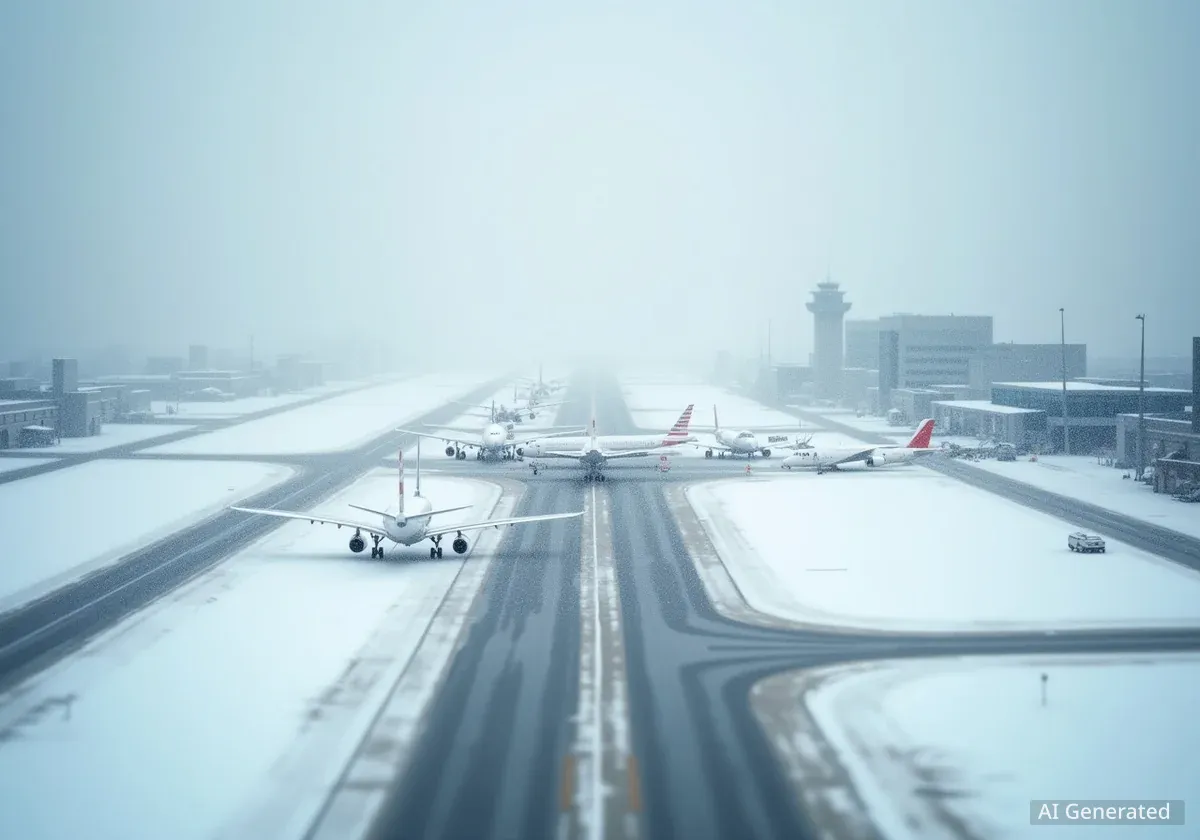
Storm Goretti, the first named storm of the year, has brought heavy snowfall, ice, and strong winds across Western Europe, leading to severe travel disruptions. Hundreds of flights have been canceled, train services are delayed or suspended, and road conditions remain hazardous, affecting millions of travelers across the continent.
Key Takeaways
- Storm Goretti has caused significant travel disruption across Western Europe.
- Hundreds of flights canceled at major airports, including Paris Charles de Gaulle, Orly, Amsterdam Schiphol, and Brussels.
- Eurostar train services are experiencing severe delays and cancellations between major cities.
- Public transport in cities like Paris and Gothenburg has been suspended.
- Authorities are warning of dangerous road conditions and urging people to avoid unnecessary travel.
- At least six fatalities have been reported across France and Hungary due to weather-related incidents.
Air Travel Severely Impacted Across Continent
Major European airports have seen extensive cancellations and delays as Storm Goretti sweeps across the region. Paris's Charles de Gaulle Airport canceled approximately 100 flights on Wednesday morning. An additional 40 flights were grounded at Orly Airport, according to France's Transport Minister Philippe Tabarot.
The disruption extended to other key hubs. Amsterdam's Schiphol Airport, one of Europe's largest, announced at least 700 flight cancellations. This followed days of weather-related issues. More than 1,000 passengers were forced to spend the night at Schiphol, with the airport providing camp beds and breakfast.
Storm Goretti Impact: Flight Cancellations
- Paris Charles de Gaulle: ~100 flights canceled
- Paris Orly: ~40 flights canceled
- Amsterdam Schiphol: At least 700 flights canceled
- Brussels Airport: At least 40 flights canceled
- Budapest Airport: 20 flights canceled overnight
In Belgium, Brussels Airport reported at least 40 flight cancellations and warned of delays throughout the day due to de-icing procedures and runway clearing. Budapest Airport in Hungary also saw 20 overnight cancellations after experiencing one of its heaviest snowfalls in 15 years.
"Our winter operations teams are prepared and will make every effort to minimise the impact on the airport," officials at Brussels Airport stated.
Rail and Road Networks Face Major Challenges
Ground transportation has also been heavily affected. Eurostar trains, connecting London with Paris, Amsterdam, and Brussels, are experiencing severe delays and last-minute cancellations. Services between London and Paris showed delays extending into the mid-afternoon.
Many trains between Brussels and London, and Amsterdam and London, are operating with limited services. This means travelers cannot disembark at intermediate stops, further complicating journeys. The French state railway company SNCF warned passengers about disruptions, citing "snow on the tracks is forcing us to limit train speed and cancel trains or adjust traffic."
Weather Alerts Across Europe
Meteo France issued alerts for heavy snow and black ice across 38 of the country's 96 mainland departments. Snowfall accumulation ranged from three to seven centimeters in affected areas. The agency described the cold snap as being of "rare intensity for the season."
In the United Kingdom, a yellow warning for strong winds is active for Cornwall, Devon, and the Isles of Scilly. A yellow snow warning is also in place for Bristol, Bath, Gloucestershire, and Wiltshire until Friday midday. The Met Office warned of difficult traveling conditions and potential delays.
Public bus services in Paris and its surrounding suburbs were suspended due to icy roads. While most metro and suburban rail systems remained operational, officials advised people in the Paris region to avoid unnecessary travel and work from home if possible.
The Netherlands also saw its rail and road networks snarled by snowfall. Dutch rail operator NS urged travelers to delay their journeys if possible, affecting both domestic and international routes. In Sweden, trams were suspended in Gothenburg, and authorities in the wider region warned against driving.
Tragic Consequences: Fatalities Reported
The severe weather has led to several fatalities across Europe. In France, five people have died since Monday due to incidents linked to the cold snap. Three individuals died in accidents caused by black ice in southwestern France on Monday morning. A taxi driver also died in a Paris region hospital after his vehicle veered off the road and plunged into the Marne river.
Hungary reported a fatality on Wednesday when a woman died after a car skidded on ice and crashed into another vehicle. In Bosnia, a woman died in Sarajevo after being hit by a tree that collapsed under heavy snowfall on Monday. Nearly 40 centimeters of snow had fallen in the Bosnian capital over the weekend.
- France: 5 fatalities since Monday
- Hungary: 1 fatality on Wednesday
- Bosnia: 1 fatality on Monday
The UK Health Security Agency (UKHSA) extended amber cold health alerts for England until Sunday. Nordic countries are also bracing for more snow-related chaos, with eastern Sweden anticipating power cuts. Authorities in Denmark's North Jutland region urged citizens to prepare for heavy snow and prioritize safety during travel.
Travelers across Europe are advised to check the latest updates from airlines and train operators before attempting any journeys. Road conditions are expected to remain hazardous in many areas as the storm continues to impact the continent.