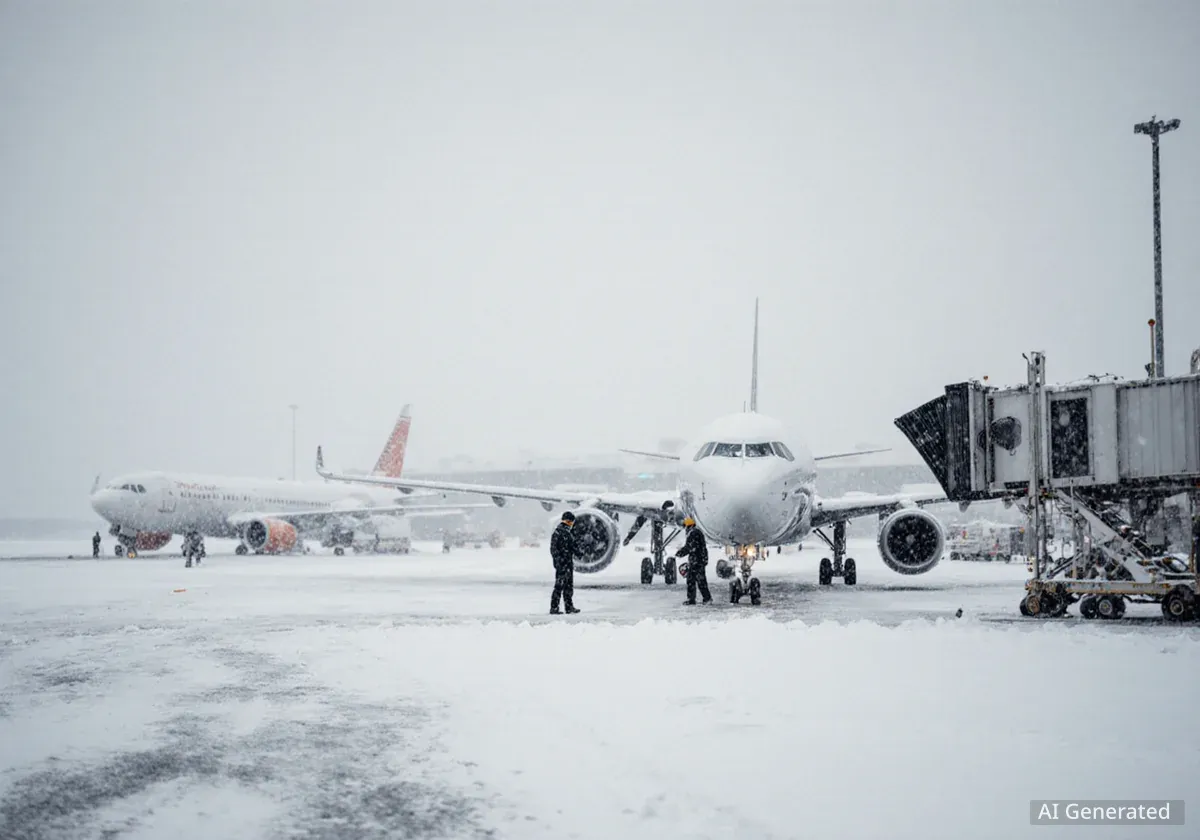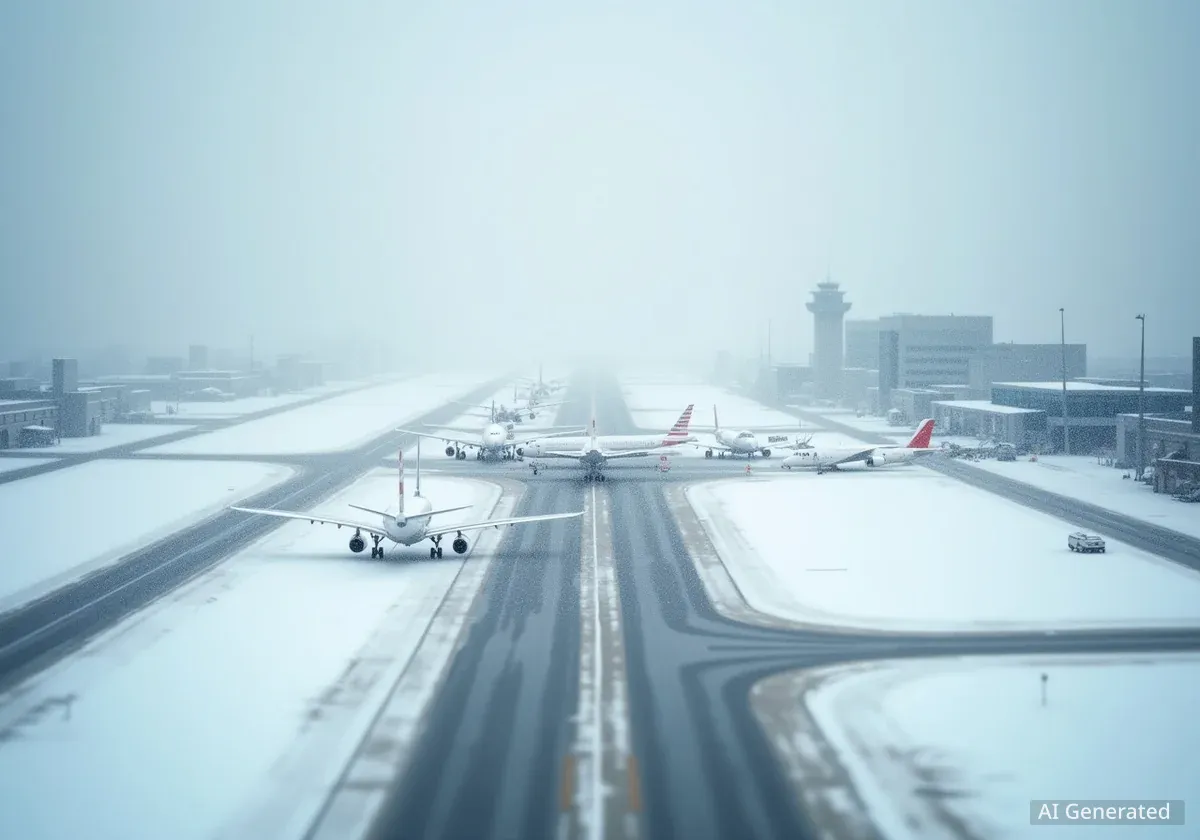
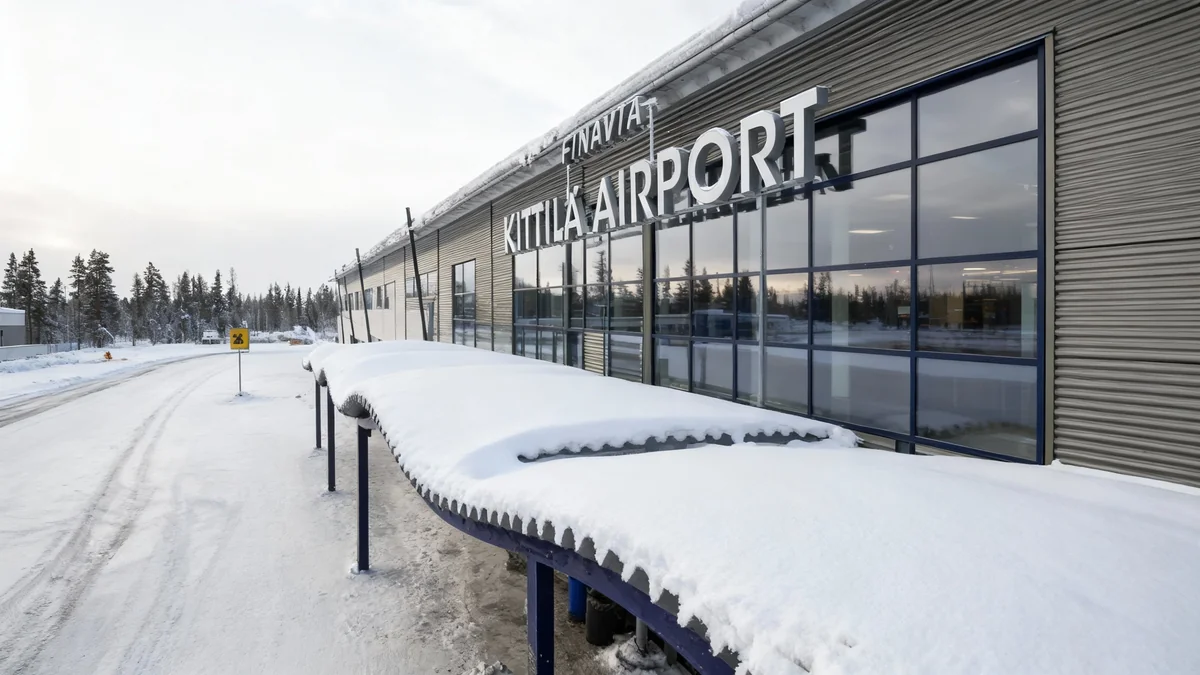
Thousands of travelers are currently stranded in Finland's Lapland region. Flights out of Kittila airport have been cancelled due to severe cold weather. Temperatures have dropped to as low as -35C, making air travel challenging and unsafe.
The cancellations began on Sunday, impacting tourists scheduled to return to cities like London, Bristol, Manchester, Paris, and Amsterdam. The issue is expected to continue into Monday, with forecasts predicting temperatures of -39C.
Key Takeaways
- Thousands of tourists are stranded in Lapland.
- Flights from Kittila airport cancelled due to extreme cold.
- Temperatures reached -35C, with -39C forecast.
- De-icing, maintenance, and refuelling are severely affected.
- Roads are also hazardous, leading to accidents.
Impact on Air Travel Operations
The extreme cold presents significant operational challenges for aviation. Aircraft de-icing procedures become difficult and less effective in such low temperatures. Ground equipment, including maintenance vehicles and refuelling apparatus, can freeze, rendering them inoperable.
Finavia, the airport operator, reported that moisture in the air exacerbates the problem. This moisture freezes quickly, creating slick frost on surfaces and further complicating ground operations. The conditions make it unsafe for both aircraft and ground staff.
Cold Facts
- Sunday's high temperature in Kittila did not exceed -35C.
- Monday's forecast predicts a low of -39C.
- The typical winter average for Finnish Lapland is -14C.
- Occasional dips to -30C are expected, but current levels are far below average.
Affected Destinations and Travelers
The cancellations have left many international travelers unable to depart. Flights bound for major European cities were among those grounded. This disruption affects tourists who visited Lapland for its winter attractions.
Kittila airport is a primary hub for visitors heading to nearby ski resorts and those hoping to witness the Northern Lights. Another significant airport in the region, Rovaniemi, serves as the recognized destination for tourists visiting Santa Claus's home. While Rovaniemi has not seen the same level of disruption, the general cold snap affects the entire region.
"The extreme cold makes it hard to de-ice planes, while maintenance and refuelling equipment on the ground can freeze," an airport official stated, explaining the operational difficulties. "Moisture in the air is making the situation worse as it is creating slippery frost."
Hazardous Road Conditions
Beyond air travel, the severe weather has also made road conditions extremely dangerous. Fintraffic, Finland's traffic management company, issued warnings about icy roads across the Lapland region. This adds another layer of difficulty for stranded travelers trying to find alternative transport or accommodation.
A recent incident highlighted these dangers. On Sunday morning, a bus carrying Ukrainian passengers drove into a ditch. Local police confirmed the incident, though no serious injuries were reported. This underscores the risks associated with ground travel during this cold spell.
Lapland's Winter Climate
Lapland, a vast region spanning parts of Norway, Sweden, and Finland, is famous for its harsh winters and abundant snow. However, the current temperatures are significantly colder than usual. The Finnish tourism board indicates that typical winter averages for Finnish Lapland are around -14C, with occasional drops to -30C.
This unusually severe cold snap coincides with a broader storm system affecting northern Europe. The storm has brought wintry conditions and travel disruptions to other countries, including the UK, France, and Germany.
Broader European Weather Impact
The cold weather in Lapland is part of a larger weather pattern across northern Europe. A storm passing through the region has caused significant travel disruptions and other issues. For instance, in England, a man died after a tree fell on his caravan.
In France, approximately 100,000 homes were without power on Saturday due to the storm. These events illustrate the widespread impact of the current wintry conditions, extending far beyond the Arctic Circle. Authorities continue to monitor the situation and advise caution for all travelers in affected areas.
- Travelers should check with their airlines for the latest flight status.
- Road users must exercise extreme caution due to icy conditions.
- Local authorities are working to manage the situation and assist stranded individuals.