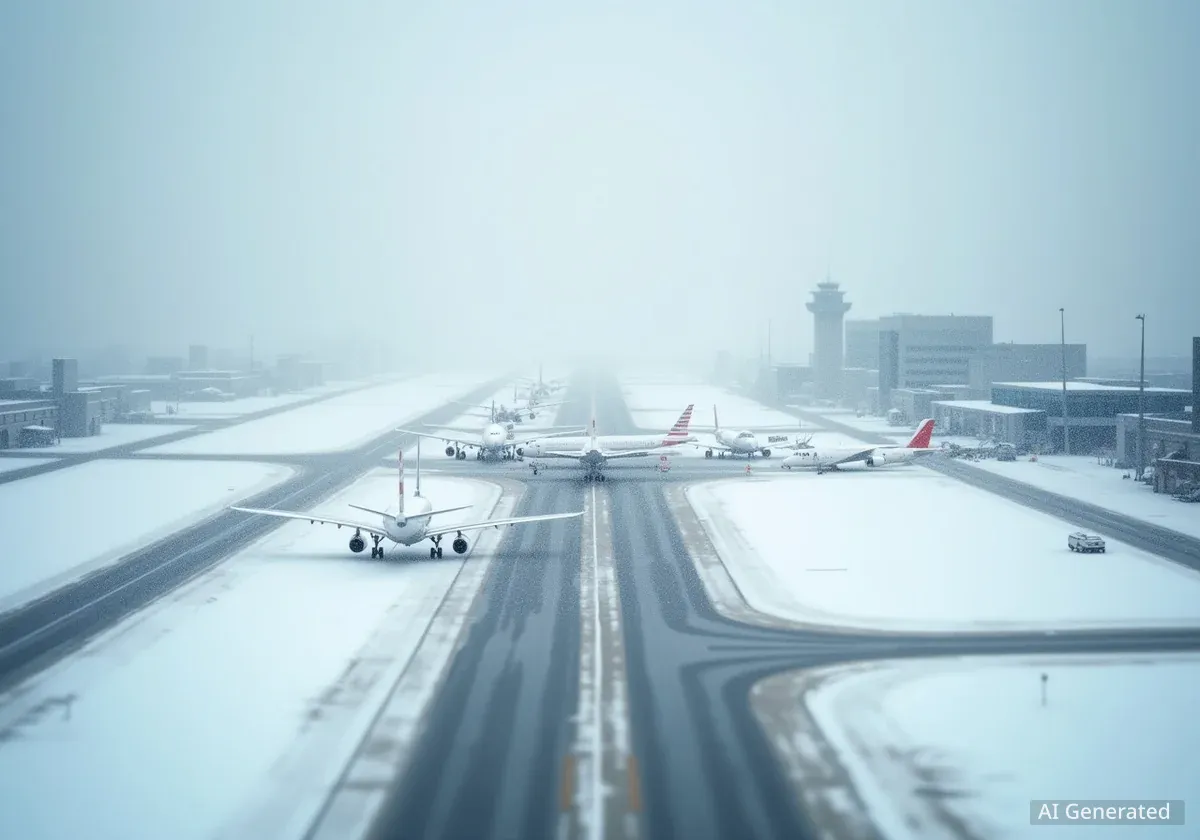
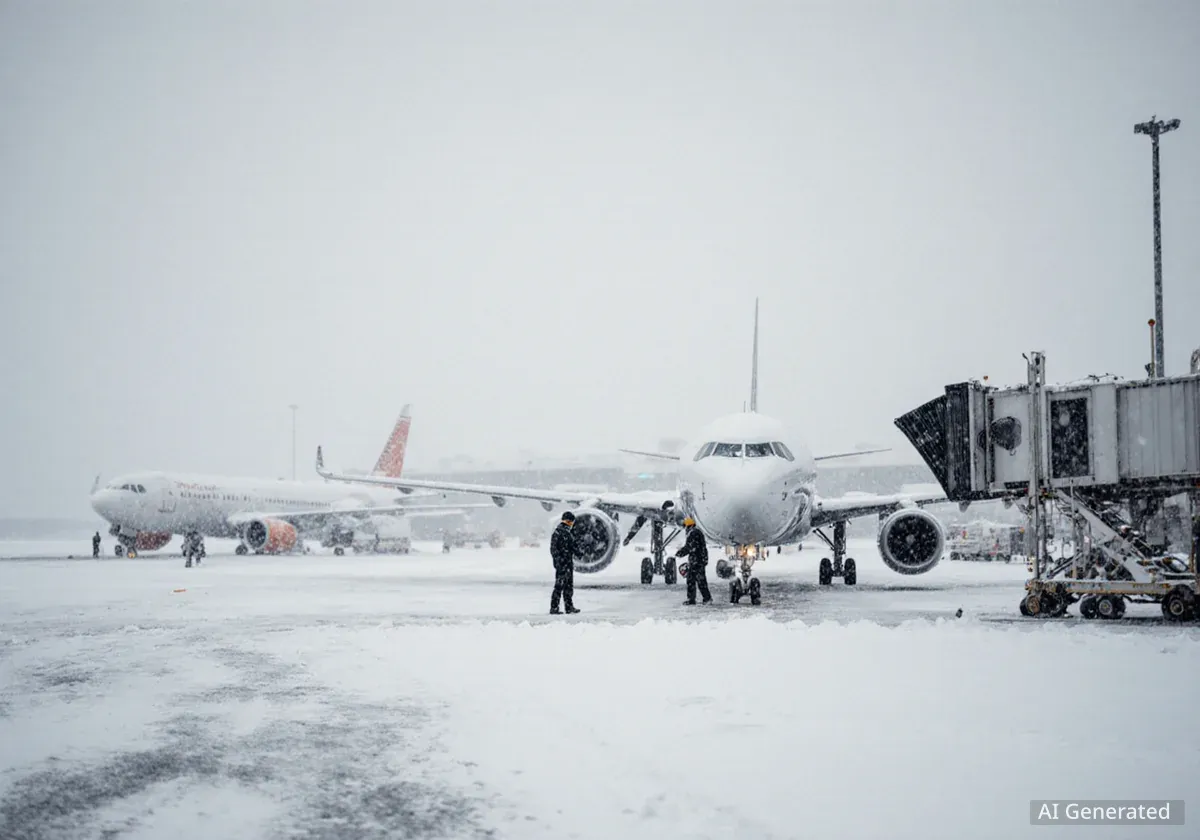
A powerful winter storm continues to impact large sections of the United States, bringing heavy snow, sleet, and freezing rain. This widespread weather event has led to significant disruptions in air travel, affecting millions of passengers and causing numerous flight cancellations across major airports.
The storm's path extends from the southern Rocky Mountains all the way to New England. It threatens over 180 million people, which is more than half of the U.S. population. Emergency services are responding to frigid temperatures, power outages, and dangerous road conditions.
Key Takeaways
- Over 11,400 flights canceled nationwide on Sunday.
- Major airports in the Northeast, including LaGuardia and JFK, saw significant cancellations.
- The National Weather Service issued warnings for heavy snow, sleet, and freezing rain across a vast area.
- Travel recovery is expected to take several days.
- Passengers are entitled to refunds for canceled flights.
Massive Flight Cancellations Grip US Airports
Sunday marked a brutal day for travelers as the winter storm caused widespread flight cancellations and delays. Flight-tracking site FlightAware reported more than 11,400 flights canceled nationwide on Sunday alone. This makes it the largest cancellation event since the pandemic, according to aviation analytics firm Cirium.
By Sunday afternoon, many busy airports in the Northeast and other regions experienced a majority of their flights being grounded. Philadelphia International Airport, for example, saw 94% of its flights, totaling 326, canceled. Inside the airport, flight status screens displayed scores of cancellations, and few vehicles were visible arriving.
Storm Impact by the Numbers
- 180 million+ people threatened by the storm.
- 11,400+ flights canceled on Sunday.
- 94% of flights canceled at Philadelphia International Airport.
- 91% of flights canceled at LaGuardia Airport.
- 80% of flights canceled at John F. Kennedy International Airport.
Northeast Hubs Hit Hardest
New York City's major airports faced severe disruptions. LaGuardia Airport in Queens closed Sunday afternoon, with the Federal Aviation Administration stating flights were grounded until 8 p.m. At LaGuardia, 436 flights, or 91% of its schedule, were canceled. John F. Kennedy International Airport experienced 466 cancellations, affecting about 80% of its flights.
Ronald Reagan Washington National Airport also canceled all departing flights for the day, amounting to approximately 421 flights. These significant disruptions extended to other major airport hubs, including Dallas-Fort Worth, Charlotte, and Atlanta, which is home to the nation's busiest airport.
Airline Operations Under Strain
Major airlines reported extensive cancellations as a result of the storm. American Airlines canceled over 1,790 flights, roughly 55% of its Sunday schedule. Delta Air Lines reported more than 1,470 cancellations, while Southwest Airlines canceled over 1,340 flights. United Airlines grounded approximately 1,016 flights, and JetBlue canceled more than 590 flights, accounting for about 72% of its daily schedule.
"Because there are so many different airlines involved, I think it's going to come down heavily to the individual airline's network structure, the extent of hit that each of them has had, and just the intrinsic capacity of the airlines to handle these massive disruptions," said Vikrant Vaze, a Dartmouth professor specializing in commercial aviation logistics.
Professor Vaze emphasized that recovery from these widespread cancellations and delays will likely take several days, if not longer. Travelers not directly in the storm's path could still face cascading delays impacting their plans.
Airlines and Passenger Rights
When a flight is canceled, airlines are legally required to refund passengers their money, even for non-refundable tickets. This includes refunds for bag fees, seat upgrades, or other unused extras. While airlines might offer travel credits, passengers are entitled to a full cash refund.
Most airlines will rebook passengers on a later flight at no extra charge, depending on seat availability. However, airlines are not typically required to book passengers on another carrier's flight, though some major airlines may do so with partner airlines.
Ground Conditions and Safety Concerns
The storm's impact on ground travel is equally severe. Aerial video from Oklahoma City showed roads and highways completely covered in snow. Across the affected regions, frigid temperatures contribute to treacherous road conditions, making travel extremely hazardous.
In New York City, Mayor Zohran Mamdani confirmed that at least five people have died as temperatures plummeted. Emergency services are urging residents to stay indoors and avoid unnecessary travel. Power outages are also widespread, adding to the challenges faced by affected communities.
Advice for Stranded Travelers
For those already at an airport, officials recommend getting in line to speak with a customer service representative. Travelers still at home or a hotel should contact their airline's reservations staff by phone or online. It is also helpful to research alternate flights independently while waiting to connect with an agent.
The National Weather Service continues to monitor the storm's progression. They predict 1 to 2 feet (30 to 60 centimeters) of snow from Washington through New York and Boston as the storm moves into the Northeast. This ongoing weather event highlights the fragility of travel infrastructure in the face of extreme winter conditions.